
The Story of God With Us: Advent and the Early Church with Blaine Eldredge
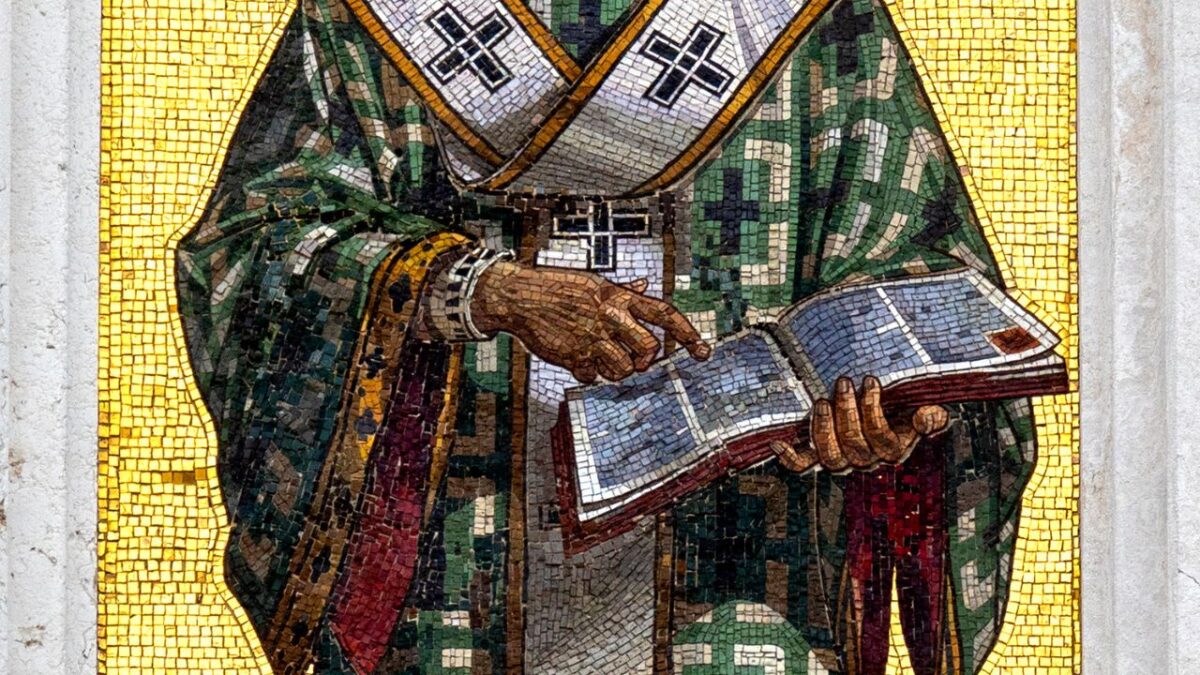
As we begin the Advent season, Dan and Rachael welcome writer and theologian Blaine Eldredge back to the podcast for a sweeping, story-rich journey into history, theology, and the fierce hope of the incarnation.
If you love church history or the nuance of theological debate, this episode is a feast. And if you don’t consider yourself a scholar, you’re still fully invited in, because the questions raised here reach all of us who long for God-with-us in turbulent times.
They approach Advent by way of one of the most compelling figures of the early church: Athanasius, the fourth-century bishop whose devotion to the incarnation shaped Christian belief for generations.
This episode invites you to consider what it means that God took on flesh amid conflict, upheaval, and hope that refuses to be extinguished. It’s a rich, timely conversation for this season of waiting and wonder.
Listener Resources:
Read: On The Incarnation by Athanasius
Listen to our 2023 episode with Blaine about his book, The Paradise King.
Terms to know as you listen:
- Who was Athanasius? Athanasius of Alexandria was a fourth-century theologian, an Egyptian bishop, and a fierce defender of Christian orthodoxy. A key voice at the Council of Nicaea, he spent much of his life in and out of political exile as he challenged the rise of Arianism—the teaching that Jesus was created by God but not fully God incarnate. Source: Hardy, E.R. (2025, April 28). St. Athanasius. Encyclopedia Britannica. https://www.britannica.com/biography/Saint-Athanasius
- What is Arianism? “Arianism is defined as an early branch of Christianity that held that Jesus Christ was not one with God the Father, but instead just created by God and a holy man.” Source: Cataliotti, J. (2022, November 30) Arianism Definition, Controversy & Heresy. Study.com. https://study.com/academy/lesson/arianism-christianity-history-controversy.html
About Our Guest:
Blaine Eldredge is a writer and teacher from Peyton, Colorado. For the past ten years he has built teaching platforms to help the Church thrive in late modernity.
He likes to read, write, and talk about culture, history, and theology. In particular, he loves to contemplate the Gospel of Jesus and make resources to convey its astonishing beauty.
He is a part of Kindred Church in Colorado Springs and holds a Master’s degree in Language from the University of British Columbia. Mainly he loves to read and follow Jesus in community as he makes it on earth as it is in heaven.
He also likes bowhunting, chopping wood, and poetry readings.
His book, The Paradise King, is available wherever books are sold.
Episode Transcript:
Dan: Rachael, it’s Advent our favorite season of the year, isn’t it?
Rachael: Well, it’s one of my favorite seasons of the year, but I know that it’s not one of yours.
Dan: Well, I don’t know why it’s not that important to talk about, but you’ve been very gracious to let us have the first advent conversation with a dear friend Blaine Eldredge, and Blaine, you’ve been with us before as we talked about really one of the most magnificent books I’ve had the privilege to read, and that is the book, The Paradise King and a second volume is in gestation and that will be on the prophets. Just welcome Blaine and a little word on this next volume before we begin to talk about a character that will introduce us to the advent season.
Blaine: Well, thank you. First of all, it’s wonderful to be back. Thank you for having me. The next volume in a proposed trilogy holding up Jesus in terms of the anointed offices does take the lend of the prophet. But in the course of reading for that series, something happened, which is that I read the works of a man you may have heard of named Abraham Joshua Heschel, and Heschel has kind of an opus that’s a public secret, is a scholarly work that is his scholarly treatment of the Hebrew prophets and then the entire tradition of revelation across all times and places, unbelievable accomplishment. The indicating of that book, he handily dismantles every pat definition of the prophet with which you could feasibly defend something like a dissertation. He goes, oh yeah, people say prophets are messengers because there’s linguistic and functional similarity, but clearly not. Example, A, B, C, D. People say that prophets participate in some higher plan, but clearly not. And what he suggested that I went, oh my goodness, if this is true, we have to reorient this book project, which is that ultimately we’re talking about a participant in God’s emotional life who through participation in God’s kind of interior experience becomes a means of transmitting beyond communicating. Jeremiah says he’s a part the rising and falling of nations, and this is not the most grandiose claim that any of the prophets makes. Becomes a big thing to say about yourself and if the through line here is going to take us into what it means to be disciples of Jesus, what is the actual prophetic nature of the church is a pretty extraordinary story. So we’re going to be going there next.
Dan: Oh, so the point is it sounds like it could be done in the next week or two.
Blaine: Give me, let’s connect in a year. If it hasn’t come out by next October or something went wrong.
Dan: Well it is a gift and there’s series that people watch on Netflix and then they don’t come back on until a year, year and a half later. So it is one of those deeply worth waiting for enterprises. But today we get to talk about a different kind of prophetic figure to talk about the nature of advent and I love the figure of Athanasius and I know you’ve done a lot of thinking and reading and engagement on his rather brief book, but still significant book, on the incarnation. So as we talk about advent, we’re talking about the incarnation, about the presence of God in human flesh and as human there is a deep radical disruption of all things that he has become us. So tell us why you think Athanasius is such a great way to begin talking about advent.
Blaine: Yeah, it is… It’s a wonderful question. Athanasius is from the crisis in Christianity in the fourth century and he really is too big to neatly introduce. I was teaching on Athanasius and I said, if you were just to list a highlight reel of his career, you would have to include things like he’s going to be exiled five times by four emperors. He’s going to have a 45 year-bishop writ leading a faithful element in the church during, I don’t know, the great theological and political crisis of the Constantinian revolution. He’s going to occasion multiple synods. If this guy shows up on a continent, there’s going to be some kind of political emergency within a week, within a month he’s exiled sometimes up in Germany, sometimes he’s in what is now Bulgaria, he’s in Phoenicia, he’s in Turkey, he’s in North Africa. He is the close friend and then the mortal enemy of first one and then a successor pope. People like Edward Gibbon, the great historian of the Roman Empire, who was a enthusiastic critic of Christianity, thought that Athanasius should have succeeded Constantine the first is the Roman emperor. Gregory of Nazianzus who was famously critical of synods and bishops, he called the ecumenical councils of his own day gatherings of cranes and geese. But when he wrote about Athanasius, he said, when you write about this man, you have to have in mind, here’s this quote, men like Enoch, Noah, Abraham, Isaac, Jacob, the 12 patriarchs, Moses, Aaron and Joshua. Then he says, with some of these Athanasius vyed by some he was slightly excelled and others, if it is not bold to say so he surpassed. So this man is on the political scene from really around 325 until he dies in 373 enormous, but he’s also very pastorally relevant and when it comes to the actual question of the incarnation, there is something so essential at stake in the kind of Trinitarian area and debate. Which is for God to become human. Does humanity have to be engulfed, meaning for Christ to increase in your life do you have to increase? Or is God in his otherness competing for space with his creation in the incarnation or is something else being displayed that would be really hopeful if it were true? So there would be a brief hook. This is who we’re talking about.
Dan: Oh, we’re talking about a dude. We are talking about the kind of human being that centuries may go by without someone quite like this. So let’s just set part of the adversarial context. He is theologically, biblically standing against a figure by the name of Arius and Arius and his crew, again, I’m putting it too simplistically, but fundamentally believe Jesus is worthy to be worshiped, but he was begotten. He was created the first of creation, the most beautiful of creation, but he wasn’t God. And in some sense the rulers of that day thought that was a preferable theological stance to take to what Athanasius was beginning to develop in his understanding, and it’s important to hear that the Trinity didn’t come to its full clarity for the church until in some sense the Council of Nicea, which Athanasius was a very crucial part of being able to play. So given what I just began, why was this war between Athanasius, Arius, and the political powers of that day preferring Arius to Athanasius?
Blaine: Yeah, a subordinate Christ is politically expedient for reasons that may become clear in the course of this conversation. There’s a note we have to add at the beginning though because it’s something that Athanasius himself said and he has this fascinating concluding paragraph in on the incarnation where he says, understanding the saints is like understanding the scriptures. To understand the saints you have to become a saint to understand the scriptures you have to be filled with and be taking on the very nature of God. It’s helpful to name because if you get on the internet and start exploring the sort of competing opinions regarding this man and this time. There’s a very cynical posture that frames Athanasius’s life as a conflict between overlapping power systems and their relationship with the empire because alongside this core question of the incarnation of the son of God, there is this deep cut moral theology question which gets called the relationship between the Sacerdotium and the Imperium, and here’s what it means: to what extent can Christianity shape and influence the power systems of this world versus simply defying them and deep in a tenacious his life and his christological work, and especially in his long-term pastoral work, he’s going to be clashing with this question, which is the tension between Christianity being a public faith that has to be realized in the management of things like nations and the inflexibility, the refusal of Christianity to be an instrument of nations. So that’s going to be real deep in here. I was going to answer the question you actually asked now, unless you ought to interject. Can we say why all of this?
Dan: No, it is. It’s a relevant question for today and at some level, Athanasius from my standpoint is saying there is no king but one king and all kings take whatever authority.
Blaine: Well, he has five exiles that are kind of going to start speaking for themselves in terms of the ultimate ability of there to be real alignment. That said, Athanasius, he’s very optimistic about the ability of good teaching and the revelation of Jesus and the Holy Spirit to shape public life. But let’s go back for a second. Okay, let’s go back for a second. A few things you have to know, if you were to start your cold open, I was thinking about this once and say if you were to make that Netflix miniseries on Athanasius, the place to begin really would be with the Halls of Nicea, and what you would do is you would scan across these venerable wizened leaders of the church all lined up. As the camera starts to pull in, you realize that they are almost universally and to varying extents, maimed, some of these guys are missing eyes, many have crippled limbs. They are literally bearing in their bodies the marks of intense suffering because here is the resilient remnant of the Diocletianic persecution. What is that? Well, right before Athanasius enters the scene, Christianity is still illegal in the most of the third century, and there’s this period called the Roman military anarchy where for all kinds of reasons, the empire went into crisis mode, civil wars, external threats, political assassinations, and it looked for a long time like Rome was going to die early except that this brilliant, brutal, capable emperor rose up from the ranks of the government to salvage the political experiment that was Rome with an iron fist, Diocletian. Diocletian rules alongside three equally hard, coldly, realistic emperors, and when it comes time to really tighten up the Roman system, there are reforms in the army, reforms in the tax system. But then there is this social purge that Diocletian undertakes, which is the big attempt, sort of Rome’s final solution regarding Christianity, and it’s really quite impressive in scale. It’s an extremely tragic time, and many of the leaders of the church who are going to define the next century, they come out of the brutal tribulation of this time. A famous one is that St. Nicholas, who is the bishop of Myra, he disappears into the jails and torture chambers of probably Maximian during the Diocletianic persecution. For seven years, he’s just gone. Right in the middle of this thing. So this really kicks off in about 303 A.D. Well, it just so happens that in 303 A.D. this young Alexandrian named Athanasius is five years old. Very likely he experiences the loss of his parents. There are many reasons to think this. The big reason is they are completely absent afterward. Not even the kind of speculative hagiographies name them, which is so conspicuous. If you have no idea who a saint’s parents were, you would pick a probable candidate and name that person and say, oh, it was Fodius of wherever, Fodius of Santo Santa. They say nothing. He’s also, he is not aristocrat. He has all the evidence of being a incisively intelligent working class Alexandrian. Why does it matter that he’s Alexandrian? It would kind of be, I don’t know, like being from Brooklyn in the 1830’s and 40’s, you know, you go, oh, this kid is growing up in an explosive, a violent, influential, rich divided city. The last thing that happens in Alexandria before Athanasius really appears is that the bishop of Alexandria, who really is even before Christianity is legal, one of the most influential people in the Mediterranean world is martyred brutally: Peter. Okay, so 311 Peter is killed. 312 that thing happens at Milvian Bridge where Constantine sees the cross in the sky, in this sun conquer and 313, you get the Edict of Toleration. You can imagine a passionate, smart, almost street dog of a disciple of Jesus coming of age with these controversies that are theological brewing just below the surface that are getting worked out in real time, in political betrayal, in expedient conversion, in neighborhoods coming apart, so that when Christianity is finally legalized and really people start ranging around for competent leaders to manage, to facilitate some kind of a healing project for Christians in the Roman empire, here’s young, Athanasius, he writes this unbelievable work on the incarnation when he is probably 19 or 20 years old. Really many people think as a way of throwing his hat into the ring saying, we really are looking for the kind of leader, but particularly we’re looking for the kind of devotional clarity that could lead us out of this crisis. I would like to be a part of that. He comes onto the scene, guns blazing, 20 years old as all of this is about to explode.
Dan: Wow. Let’s just pause and go. Like every era has similarities to other eras, but the explosive reality of a divided, polarized, martyred, traumatized day. Again, the boldness to open up the conversation in an area where as least I understand the dominant theology was from Arius’ standpoint. Would that be well said or not?
Blaine: Very true. True. Arianism is the majority position at this time, and what’s interesting is that Athanasius is going to be defined by his opponent Aria. Aria is kind of a major figure over the next several decades, but the real thorn in Athanasius’s side is two parties. One is the Roman emperors who are overwhelmingly Arian, and the other is the most powerful man in the Christian world Eusebius of Nicomedia who is the bishop of the powerful provence in the imperial capital in Constantinople who is going to kind of behind the scenes back channel, pull strings, play the political game to occasion. The first three of the exiles of Athanasius, Eusebius is going to be the guy who does the deathbed baptism of Constantine the Great, so you have, he’s coming out here in favor of a position that he views as meaningfully orthodox, right? This isn’t orthodoxy for orthodoxy’s sake, this is orthodoxy for its results and for the kind of long-term implications of embracing a subordinate son versus not, and he’s against the world. I mean, from the very, very beginning, his little trinitarian faction in Alexandria is a minority as soon as he becomes bishop after the first Council of Nicea.
Rachael: Well, I think I find myself going, okay, look for those listening. I hope you’re as fascinated as I am because this is making me want to deep dive in church history in a way I haven’t felt in a long time. So I just want to say thank you for being such a compelling storyteller who’s setting a scene that really matters, right? The context changes everything. You can study theology and these ideas and these philosophies and get into the, I love how you just said these arguments that we think they’re just kind of about ideas, but that sense of a meaningful orthodoxy would say to me, there’s a lot at stake if we get this wrong at a time when Christianity is moving from the margins to the seed of power. So I would just be curious to hear from you, Blaine, what’s at stake in this meaningful, orthodoxical… is that a word?… battle, so to speak.
Blaine: It is now. It is beautiful. Yes, it is. The question, it’s the right question is what’s at stake, I think because many of us, quite understandably, have been turned off by a certain kind of insignificant theological debate. This is not one of those, and this is you overhear these things. If you wind up in places like seminary, I’m really passionate. Is that what is happening here? Honestly, in some cases, sure, yeah. But ultimately what the stakes are going to wind up being are this, and this gets to why does Constantius the Emperor, why is Constance to a very… why do the successors of Constantine prefer Arianism besides the fact that most people are Arian? So you can say, is there a kind of economic and political incentive here? It was just, this is what most people are, the most powerful men in the empire are this thing. This should be the orthodox position, but secondarily, it’s going to allow a separation between God and his creation that is very, very useful if you happen to be a human ruler. So it works things like this. So Constantine, early on, he’s trying to broker a kind of peace treaty between factions within Christianity, and he’s trying to basically propose a solution for an imperial faith that’s acceptable to the leaders of Christianity. And what he says is, I do not retain for myself the ability to judge matters of doctrine or church discipline… you’re going to find them for as much later saying, your proper domain is the governance of souls. You go, okay, that kind of sounds good. Where is this going? And he goes, but I retain for myself the management of men’s bodies, and I also retained for myself the authority to decide which of the gatherings of bishops on matters of doctrine were legal and legitimate. Brilliantly kind of diabolically, brilliant. If you’re an emperor, that’s a pretty good plan. How does that relate to your Christology? Well, it works. It works if the real penetration of God into the human experience is never fully possible, therefore, there’s going to be this permanently retained domain of political management when it comes to the transformation of the human being. Okay. You can just imagine, oh, this sounds really good, because Christ is the subordinate first creation of God means that we’re not violating the distance between God and his creation. And it also means, as we said at the beginning, this is hundreds of years, about a hundred actually years later, 150 years later, this is going to be finally resolved at Chalcedon. But they’re going to say, but for God to, in any meaningful way to increase inside a person’s life, they would have to become less. Interestingly enough, this view survives often in the way that people talk about their will and God’s will. And that’s not the only place, but that whole, I don’t want my way in this, I just want God’s way. But what if that’s not what God wants? What if actually he’s not threatened by you fully possessing a will with which you can meet him as an invited kind of dance partner in determining your future? What if Christ’s increase in you is going to result in the simultaneous increase in you? What if this whole separation of the divine from the natural is untrue? Well, it’s a really big problem. It’s a really big problem if you are an emperor, because you’re never going to get the religious authorities to agree to your proper domain of engagement. They’re never fully going to give over, you know what? Yeah, you should sort of engineer a safe society because that’s the proper domain of an earthly authority. They’re always going to be pushing back on you for that territory going, actually, our plan is the formation of Christ and people back to the end of on the incarnation. It’s not for nothing that on the incarnation, the last paragraphs are not about the incarnation of the son of God. They’re about becoming a saint. They’re about the transformation of the person into the likeness of Christ while retaining their self. So I think you can kind of see a little bit how this represents a major political challenge if you’re going to dig your heels in on this point of the compatibility, the covenantal accessibility of God and his creation.
Rachael: Well, and can I just add to that and if part of maintaining an empire is still having hierarchy of human worthiness, this also changes everything. I mean, we know this. It’s in our doctrine, right? It is a dismantling of all false binaries and any kind of hierarchies of supremacy of who has more rights if you are actually with what you’re saying is true. And God’s presence with us not only increases our connection to the divine, breaks down the separation, but also increases our humanity and our belovedness and what we’re meant for. That’s problematic. If you’re trying to maintain systems that say some people are less and other people are more that’s going to directly push against that.
Blaine: You kind of hit the nail the head because this is the big deal on the problem, which is that if Jesus has taken to himself a fully human nature without somehow subordinating his status as being the fully God of the same substance, homoousios as the Father, and then he’s taken in the ascension, right? He’s taken humanity and anchored it at the center of the Godhead, well, whose humanity, whose humanity has Jesus anchored in the very center of the trinity. Everybody’s. Everybody’s. This is one of the proper theological conditions for universally acknowledging the image of God in all people. This is that you’re going to get Basil and others saying later on that God became man, that man might become God. This is this universal case for the inclusion of all people in this salvation project. So it’s a real big deal.
Dan: It absolutely disrupts all power structures and invites a person into a level of integrity that comes by the presence of the living God within them. So when we talk about the incarnation, we can’t help but talk about to some degree, Athanasius view of deification. Is that a fair sentence?
Blaine: Yeah. It is the consequences of his vision of the incarnation.
Dan: Yeah. Talk a little bit about his view of deification.
Blaine: Athanasius is really interesting on this, and again, his sort of on the incarnation is his earliest work. It is one of his greatest work. A lot of his theological working out of these things over time is going to take shape in these, they’re called the Festal letters. It’s the job of the Bishop of Alexandria after the Council of Nicea to pick the date for Easter based on the rising and setting of certain moons and to make that date known. So he has to write that even in exile all the time. But those letters are actually quite wonderful in which in them you get Athanasius, the Expositor, Athanasius the theologian, and he’s going to go deep into Old Testament typological theology, that kind of which most of us can really only aspire to. But you read a short work like on the incarnation and famously C.S. Lewis wrote the great introduction to On the Incarnation where we get that phrase, the clean sea breeze of the centuries blowing through our minds. He made a claim in there that I don’t totally agree with. It’s always risky business to disagree with CS Lewis in public. But he says, the great is going to be easy to understand precisely because he’s great or she is great, and that’s, with someone like Athanasius, it’s not always true. You read On the Incarnation, you can read it in an hour and a half. If you have a strong cup of coffee and quiet, utter silence, you might be able to get through it because he’s in a frame made your theological principles in terms of these offhanded language that really is the language of Greek philosophy asides. So for example, he’s going to say in the beginning of that work “for the more he is mocked among the unbelieving, the more Jesus is mocked among the unbelieving, the more witness as he give of his own godhead in as much as he not only himself demonstrates as possible what men mistake thinking impossible, but what men deride is unseemly this by his own goodness he clothes with seemliness. And what men in their conceit of wisdom laugh at is merely human. He by his own power, demonstrates to be divine.” Oh, that’s a beautiful idea Athanasius, wait, let’s slow down and zero in on that where Athanasius is going to be deeply invested in the down to earth-ness, the simplicity, the humanity of Christ in his incarnation, and he’s going to basically lay out what you could see as a soteriology of participation. He’s going to have a little bit of this framework of salvation through participation in Christ that goes, oh, well, he saved men from death by touching death. He has this wonderful line where he says he might as a man transfer all men to himself and center their senses in himself and men seeing him therefore as human, show him in his works that he is not man only, but God. Well, what is he getting at in this? He’s getting at this vision where Jesus’, full embodiment, full embodiment, touching every part of the human condition is the means by which all of humanity can be raised and elevated to the very nature of the glorified Jesus. And this is that what he doesn’t participate in, what can he save? You go, no, he touches everything human even participating in death. So that to the furthest limit of what is merely human, he’s going to show to be divine, gathering it up and raising it with him in the resurrection. This is a very high vision of the future of humanity sharing in Christ’s resurrection.
Dan: And that participation is something we participate in now and that it is not merely when we are risen to become like him. When we see him, then we will be as he is. But as I understand at Athanasius, there was a sense in which he lived in the presence of the divine within him to a point where that notion of divinization that we are becoming again, not God, like God, but in that we actually experience in our viscera, in our splagna, in our very heart, mind, body, soul, something of the presence of God in a way in which it isn’t just a situational, it’s a very existential experience of the presence of God. That was, at least from my reading, a very radical beginning point.
Blaine: You know where else you see it too is, you see it in the introductory paragraph of many of the Festal letters that were written in exile, which have such a strong sense of sharing in the sufferings of Christ as a means of participating in God because they’re so full of pain and longing and we know we’re being slandered and things are real dark right now, but then he’s going to make this turn, which is nevertheless, nevertheless, let us keep the feast like I can joyfully announce to you the most holy of occasions are coming together to celebrate the resurrection, which as you were saying, indicates an Athanasius, if not, he’s not going to write an explicit treatise on sanctification or on theosis or divinization. He’s going to embed his assumptions about the way all of this gets done in a combination of biblical exposition and practical pastoral advice. And in the practical pastoral advice, he’s always going to point to the pain of our separation and suffering as a means of participating in God and ultimately coming together into fellowship with him at the common table. It’s a pretty extraordinary, it’s one thing to assume it from, I don’t know, from the ivory halls of the academy, a place I very much admire. It’s another thing to have someone in exile regularly under threat of death, having to sneak out of cities at night multiple times, still viewing the suffering of the real anguish of persecution often and political persecution in his case is a means of being united with Jesus.
Dan: So Rachael, I want to ask you, how does this help you prepare for Advent?
Rachael: It’s a great question, Dan, and I’m just loving… I trusted you when you said, I think we should talk about Athanasius in the first week of Advent, and I know who I want. I was like, I will get there. I trust you. Let’s go. But it just has me thinking about, because there’s also, I’m hearing when Jesus says what you do unto the least of these you do unto me or what you’ve asked me, what about the law and the prophets on all these things saying, love God and love neighbor. Obviously, I’ve connected those to the incarnation some way, but they’re feeling much more palpable as I think about this advent season. I’ve always loved the kind of just, especially becoming a mom, just the humility and absurdity that the God of creation had enough belief in our goodness and possibility to entrust the most fragile being the most fragile way of being human too. It’s not like God could have just been like, I’m instantly a grown person and I’m here with you. But to actually enter the process, I’ve always been struck by the humility just what does it mean about our bodies? That they’re not just something we will depart someday and they don’t matter, they’re just a burden. But I think this conversation is actually shifting or making deeper connections to some of the greatest pastoral, for me, theological, biblical kind of ideals that I’m trying to live into. And so it’s kind of shifting some of the marvel and wonder of what I’ll be pondering in this season where there is so much, not a glorification of suffering, but just this deep sense of God with us, not just through the Holy Spirit, but God in us, God with us, God for us. So I actually have a lot to ponder. I think I have more questions right now than I have… so I’ve just feel a lot of gratitude for this conversation. And Blaine just for your labor and your generosity to bring these stories to bear in a way that feels tangible. And so yeah.
Dan: I’m going to ask that question of you Blaine in a moment, but my quick response would be to say it’s just no surprise, every empire wants to set a theology that does not allow the living God to shine as bright as God desires from within us on behalf of others. It is a matter of control. It is a matter of keeping power, but when power is actually in the presence of your body, because the power of the goodness of God is the powerful presence of invitation to those who are without to come within, and those who are within to be humbled to receive those who are without it is paradox. It is the play of the incarnation at the core that it doesn’t make sense. It makes all the sense in the universe and for you, Blaine, how does this prepare your lovely heart for Advent?
Blaine: I’m grateful for your reflections. Thank you both. There’s a line in early on and in the incarnation where Athanasius asks, why then did he not appear by the means of some nobler part of creation and use a nobler instrument? And he lists them this sort of neoplatonic idols such as the sun, the moon, the stars, fire or air instead of man merely. So God is going to fully reveal himself through some, why not use something more apparently noble? And Athanasius answers that question by saying, well tell them that the Lord came not to make a display, but to heal and teach those who are suffering. And there’s something pretty extraordinary contemplating the humility of the incarnation, the depth of the descent of the incarnation, which is the beginning of God going all the way down to the uttermost depths of hell. In the humility of that, there is a pretty extraordinary invitation, which Athanasius was just naming. Why did he do it? He goes, well, because he actually wasn’t interested in spectacle. He had nothing to prove. He came to heal and to teach those who were suffering, to draw near and to participate even in the worst parts of their life. So that by being in them, he could, by his own presence, the power of his resurrection, redeem them. So thinking about Athanasius and the incarnation, but wow, what you’re seeing in the baby in Bethlehem is the kind, as he’s coming to obviously shake empires and rule heaven and earth, but he’s also coming with a simplicity of care to those who need him to heal, which is apparent in the way that he takes on humanity.
Dan: Oh, dear friend. Let’s just say may this season in all its goodness and all spectacle of paradox give you ground, give you great ground to write more of the book that I want to read before October, but may it also be, again, a sweet season to allow your heart to be captured in the arms of the one who delights in you.