FAQs
Do I need to be in therapy to participate?
Not necessarily. NFTC Level I is not a replacement for therapy, but many people engage the training alongside therapy or as a next step in their healing. We recommend that you’ve had some sort of experience engaging your story, whether through therapy, counseling, a Story Workshop, Recovery Week, or work with an individual trained in NFTC. If you’re unsure, we’re happy to talk with you about what kind of support would be most helpful for where you are in your journey.
What are your theological beliefs?
The Allender Center is an unapologetically Christian institution that engages theology, psychology, and spirituality through thoughtful dialogue and embodied practice. NFTC is rooted in Christian theology, yet we aim to avoid restrictive dogma and spiritual bypassing of wounds. Instead, we cultivate a community of discourse, collaboration, mission, and shared life within our training cohorts.
Many participants find their beliefs are stretched, questioned, or deepened in unexpected ways. This is not a threat to faith, but is an invitation to wrestle, reflect, and grow in your understanding of yourself, others, and God.
We hold space for doubts, questions, and complex faith journeys. There is room for your experience here. If you do not identify as Christian, you are welcome; however, please note that the curriculum is grounded in Christian theology and includes engagement with Scripture.
To learn more about the theological identity of the Allender Center and The Seattle School of Theology, visit theseattleschool.edu/about/theological-statements/
Your story does not exist in isolation. All aspects of our human experience—culture, race, gender, sexuality, and socioeconomic context—shape how we understand ourselves, our relationships, and the world around us. As part of NFTC, we explore how these factors influence both your personal story and the stories of those you seek to serve.
Some of the concepts we present may feel challenging or unfamiliar. That is intentional. Expanding awareness of your personal and collective identity allows you to engage more fully and compassionately—with yourself, your relationships, and your community.
We approach this work thoughtfully and respectfully, creating a space where you can wrestle with these realities in a safe, supportive, and faith-informed environment. The goal is not simply intellectual understanding, but deeper empathy, integration, and wholeness in your life and in the lives of those you serve.
Faith gives us meaning, belonging, and hope. Yet embodied wounds require embodied healing. Trauma affects your mind, body, and relationships, and we believe God meets us in the fullness of our humanity. Faith and psychology are not at odds; together, they offer a richer path toward wholeness.
Is this confidential?
Yes. We take confidentiality seriously. Your story is yours to share, and is kept within the confines of your small group. Your facilitator will provide clear guidelines so that every participant can feel safe, held, and honored.
I’m worried about the cost. Are there scholarships or payment options?
Yes. We offer payment plans and limited scholarships to make the training more accessible. If finances feel like a barrier, we encourage you to reach out—many people are surprised by what becomes possible when we talk through options together.
Is this a counseling degree?
This is a personal and professional training with Continuing Education Credits (CEUs) included for clinicians. If you’re interested in becoming a professional counselor, we encourage you to chat with our Admissions Team over at The Seattle School of Theology & Psychology about their
Master of Arts in Counseling Psychology program.
In-Person Cohort: Ideal if you want in-person Story Groups, connection with fellow trainees over breaks and shared meals, and a focused, screen-free learning environment. Best if you can attend all four weekends in Seattle.
Virtual Cohort: Ideal if you need flexibility, want to participate from home, or prefer to avoid travel while still engaging fully in Story Groups and teaching sessions.
Can I mix in-person and virtual participation?
To support group continuity and ensure the best experience for everyone, you need to commit to attending all four weekends in-person at our Seattle location. Our In-Person Cohort is intentionally designed for full presence and participation in the shared, immersive Story Group sessions that occur onsite.
What do I need to participate in the Virtual Cohort?
You’ll need a quiet, private space where you can focus for the entire training weekend, plus a reliable computer with high-speed internet, a webcam, and a microphone. Be sure to secure childcare and/or time off work, if applicable, to ensure uninterrupted learning. All teaching sessions are livestreamed, and Story Groups meet online with your cohort.
What should I know about attending the In-Person Cohort?
All training weekends take place at the Allender Center at The Seattle School of Theology & Psychology, located at 1130 Rainier Ave South, Seattle, Washington 98144 (
View map).
Note: This is a new location! Our old address was on Elliott Avenue; please update your records.
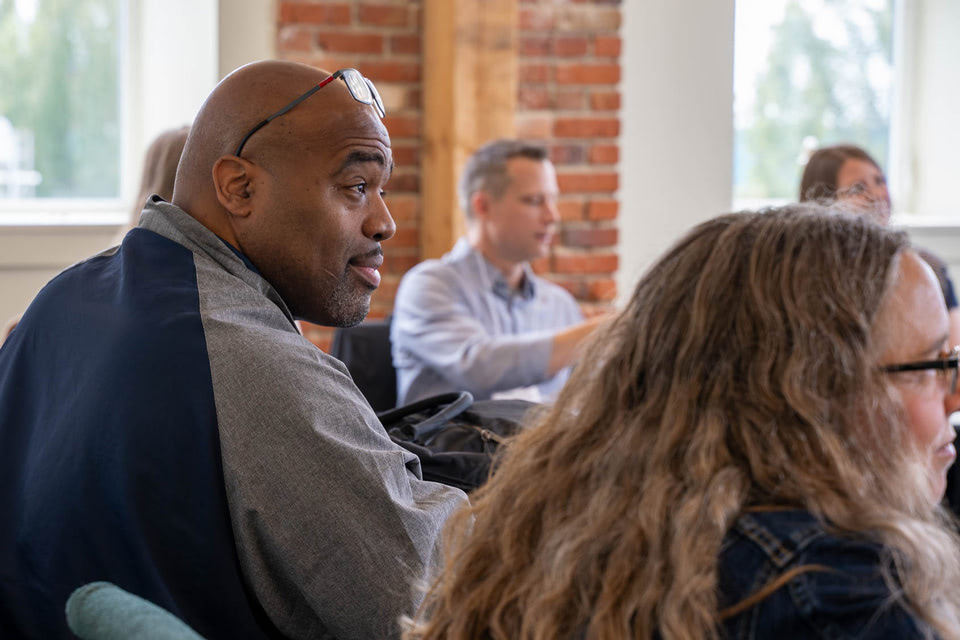
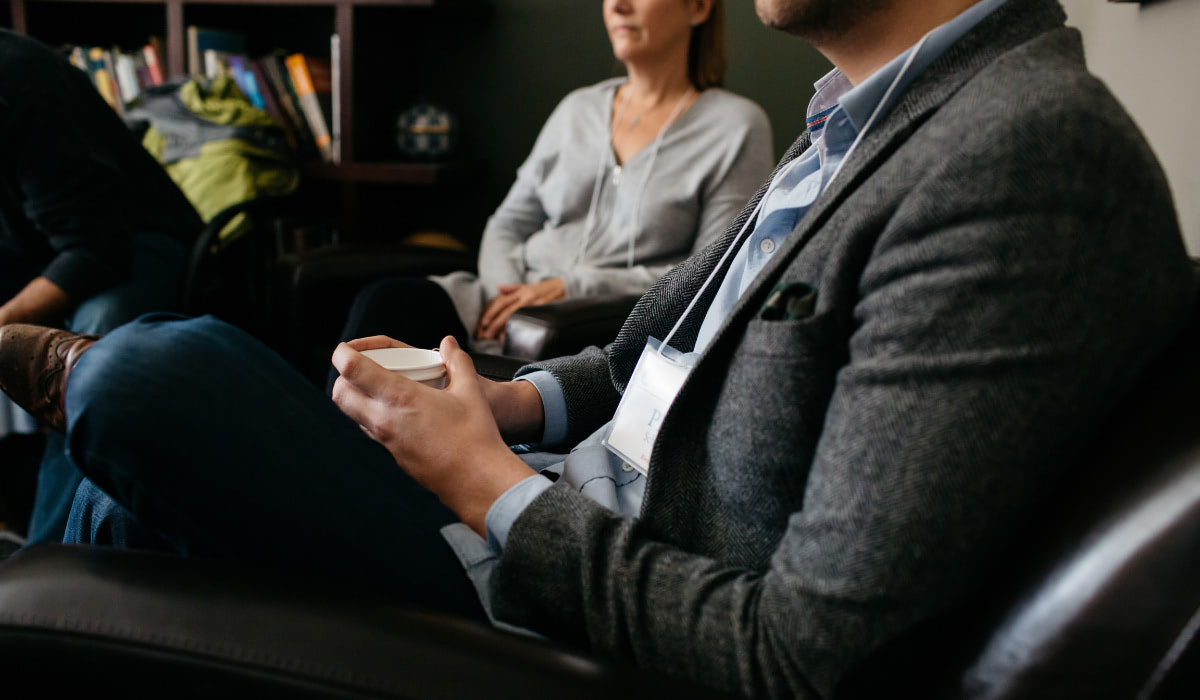
Teaching sessions are livestreamed for the cohort to watch together in the classroom, while Story Groups are facilitated in-person, giving you a chance to engage deeply with your group. You’ll also have built-in opportunities to connect and share with fellow participants during breaks and meals, creating a rich, relational learning experience.
Participants arrange their own lodging and transportation, with opportunities to coordinate with fellow cohort members if desired. Plan to arrive in time for Thursday morning sessions and stay through Saturday evening.
Still have questions? Please reach out to our Admissions Team at programs@theallendercenter.org with any other questions you may have as you discern if you’d like to participate in the Virtual Cohort or In-Person Cohort.