
“Liturgies for Resisting Empire” with Kat Armas
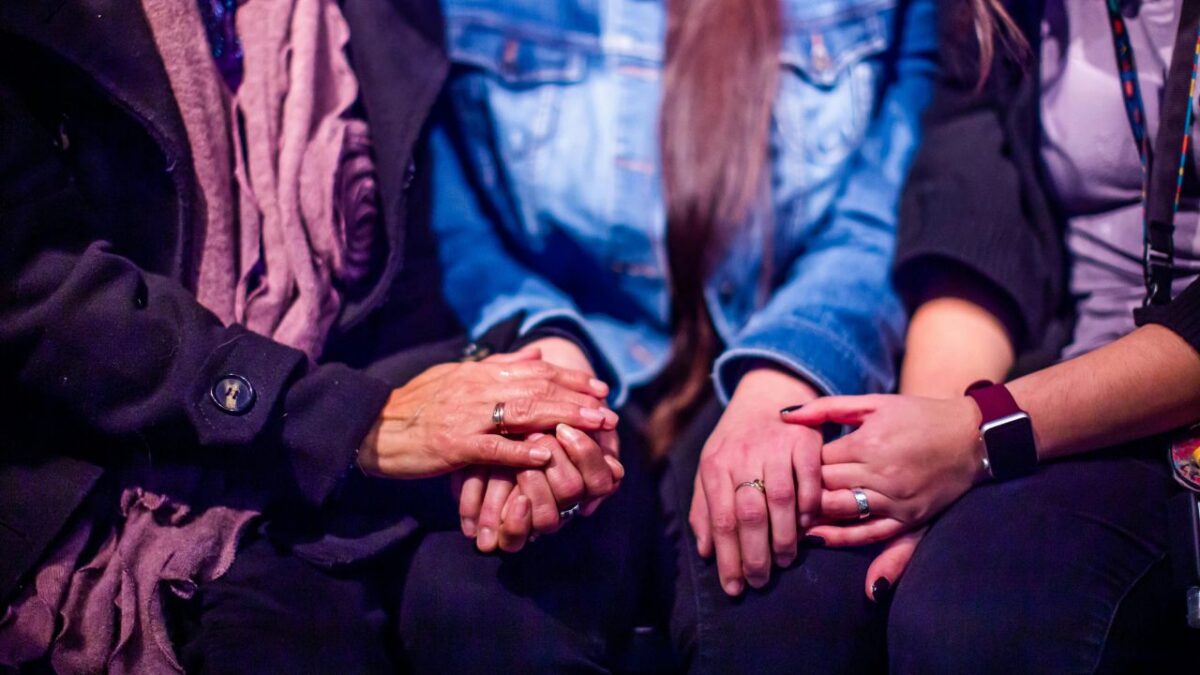
In a country that is hurting and fractured by deep division, many of us are wondering how to remain rooted in love. As followers of Jesus, the question before us is not simply what do we think, but how do we stay human, attentive, and faithful in such a time as this?
In this thoughtful and spacious conversation, Rachael Clinton Chen welcomes theologian and author Kat Armas into a much-needed dialogue about power, imagination, and what it means to remain grounded and joined together in the way of Jesus.
Drawing from her newest book, “Liturgies for Resisting Empire: Seeking Community, Belonging, and Peace in a Dehumanizing World,” Kat invites listeners beyond political binaries and party lines into a deeper reckoning with how power has shaped our stories.
Here, empire names more than a political system. It refers to any way of organizing life—political, theological, cultural, or personal—that relies on power and fear to preserve itself, rather than love, humility, and mutual care. Often, its influence goes unnamed, shaping our imaginations, our bodies, our relationships, and even our spirituality.
Against this backdrop, Kat offers liturgies as embodied practices that can steady us, give us language when words feel thin, and help us resist dehumanization together.
This episode is not about debating political parties or policies. Instead, it invites us to slow down, to notice what’s been “in the water” all along, and to return our attention to Jesus. We hope this conversation offers something more sustaining than easy answers—a holy resistance shaped by presence, community, and love.
About Our Guest
Kat Armas is a Cuban American writer, speaker, and theologian from Miami, FL. She holds a ThM from Vanderbilt Divinity School, and a dual MDiv and MAT from Fuller Theological Seminary where she was awarded the Frederick Buechner Award for Excellence in Writing.
Her first book, Abuelita Faith: What Women on the Margins Teach Us About Wisdom, Persistence and Strength, sits at the intersection of women, decolonialism, the Bible, and Cuban identity. Her second book, Sacred Belonging: A 40-day Devotional on the Liberating Heart of Scripture invites readers to encounter the Bible through a decolonized lens, lifting up themes of creation, wisdom, spirit, the body, and the feminine.
Kat has spoken at seminaries, universities, and conferences nationwide and her work has appeared in the National Catholic Reporter—where one of her essays was shared by the pope!, Plough Magazine, The Christian Century, Christianity Today, Sojornours Magazine, and more.
Kat currently lives on a small farm in middle Tennessee with her family—which includes her spouse, young children, chickens, goats, pigs, dogs, and cats. Her latest labor of love, Liturgies for Resisting Empire: Seeking Community, Belonging, and Peace in a Dehumanizing World examines the ideologies of empire that infiltrate daily life and offers a pathway toward liberation.
About the Allender Center Podcast
For over a decade, the Allender Center Podcast has offered honest, thoughtful conversations about the deep work of healing and transformation. Hosted by Dr. Dan Allender and Rachael Clinton Chen, MDiv, this weekly podcast explores the complexities of trauma, abuse recovery, story, relationships, and spiritual formation. Through questions submitted by listeners, stories, interviews, and conversations, we engage the deep places of heartache and hope that are rarely addressed so candidly in our culture today. Join the Allender Center Podcast to uncover meaningful perspectives and support for your path to healing and growth.
At the Allender Center, we value thoughtful dialogue across a wide range of voices, stories, and lived experiences. In that spirit, our podcast features guests and hosts who may hold differing perspectives. The perspectives shared on this podcast by guests and hosts reflect their own experiences and viewpoints and do not necessarily represent the views, positions, or endorsements of the Allender Center and/or The Seattle School of Theology & Psychology.
Episode Transcript
Rachael: Good people with good bodies. We are in the midst of some harrowing, treacherous days. And I know for myself as I’m trying to hold on to what it means to be human, to be a follower of Jesus, to be faithfully attentive at such a time as this, I am looking for the people who are bringing just good wisdom and who are staying in their bodies and who are contending with our disordered imaginations. That’s a word you’ve heard from me. And so I’m very thrilled today to be welcoming Kat Armas to join us. Kat, thank you so much for saying yes to this.
Kat: Thank you so much, Rachael. I’m so happy to be here. And yeah, I mean, particularly in this time when it just feels like a lot, right? It just feels very overwhelming. There’s not many words. I feel like words keep, I keep losing the words when it comes to, just, yeah, the times that we’re in.
Rachael: Well, we’ll talk about that. I think so much of that loss of language is how our brains fragment in the midst of trauma and also just how we’ve lost the capacity for words and nuance. And if you’ve not had the privilege of encountering Kat, she is a Cuban-American writer, speaker, and theologian who currently lives on a small farm in Middle Tennessee with her family, including her spouse, children, and beloved farm animals. And I love how this located-ness comes through in your writing. She holds a master of theology from Vanderbilt Divinity School and a dual MDiv and MAT from Fuller Theological Seminary. You are such a prophetic and poetic writer, but I also think you’re incredibly priestly in just these various ways you locate our liberative work in context, in the tangible and in the accessible, and it certainly shines through in your previous books, Abuelita Faith and Sacred Belonging and is most poignant in this recent labor of love that’s just come into the world in November, Liturgies for Resisting Empire: Seeking Community, Belonging and Peace in a Dehumanizing World. I’m sorry if I’m fangirling. I’m not trying to, I have been waiting for this book and already am being deeply shaped by it in life-giving ways, and I just want people to have access to it. It’s such a rich work, and I just want to give a caveat that this conversation will not in any way be able to do it justice. So yes, this is my shameless plug, for those of you listening, if you have not encountered Liturgies for Resisting Empire, that you find it where you can. And so again, I believe you have a podcast as well where you are bringing some of this work in conversation with others. So there’s multiple ways for you to connect with Kat and her work. But just before we jump in, I just want to say that the rhythm of your writing with each chapter, starting with an invocation and reflections from various Indigenous stories and cultures, and then bringing a lot of rich, theological, historical, sociological, anthropological, scientific work kind of into the mix, and then these prayers of resistance in benediction that close each chapter. Again, I think this is just a very thoughtful, embodied and spiritual work, and it’s engaging the imagination. And we talk a lot here at the Allender Center about the power of imagination and the power of story. And yeah, we are deeply, deeply disordered in our theological imagination because of our location in an empire. And I know that’s language that in this political environment could send some people already checking out. And I just want to invite you to stay, to have some courage and to stay, and I would love to turn it to you around when we use this kind of language of empire, what are we talking about and what do you see as being just a part of the problem and maybe a part of the possibility of this moment?
Kat: Yeah. Well, first of all, Rachael, thank you so much for those generous words. Really just hearing that it’s very humbling and very encouraging and very empowering. So thank you so much for your generous words about my book and just my work in general. So yeah, that’s a great question. What are we talking about when we say empire? I think that was actually the question that got me to want to write this book. We live in a time where all these sort of words that were generally in the academy, these terms trigger and decolonize an empire. They’ve sort of entered the mainstream, and that’s not a bad thing. Of course, thanks to social media, I mean, we have access to these sort of terms and these words and that’s great, but as it can happen, they can get watered down or the definition can get sort of lost in that. And I realized this, I write about this in my book, but I was with some friends and we were talking about the empire. And I had been studying, I’ve been studying empire and the academy for some time, and they were like, we were just with our church group and we were Googling Webster’s dictionary, trying to understand, all come to a definition of what we were talking about. And I loved that. I’m like, well, great, that’s what we should all be doing. And also we should have a resource for this, but we’re not having to Google and ask Webster’s dictionary what the definition is. So that’s the energy behind that. And then also, I’m a theologian, and so I wanted to speak to this through that specific lens, right through the lens of someone who wants to connect this to our theology to who we are as spiritual people. So when I talk about empire, of course I’m talking about sort the traditional meaning of empire as I write about in the book. It’s a relationship of power between a dominant ruling state and a lesser powerful one. And empire is referring to not just the physical expansion, but the ambition behind it, the ambition of domination and how that ambition started off as an emperor, like a physical actual emperor, wanting to extend his power to other people and other lands. And then that ambition sort of took off and became its own thing and then, and that stretched out into something like imperialism, which then took again, same ambition, different shape. And then when we talk about empire, because it’s sort of stretched past beyond emperor, past beyond a physical state, what I’m speaking about in the book is how empire has woven itself into, as you mentioned, our imaginations into our stories. But it’s so deep and it’s so pervasive that what I argue is that it really has sort of etched itself into everything that we are, everything, how we understand our relationships to our bodies, to each other, to the divine, to time to leisure, I mean quite literally everything. And so what I’m saying is that here are the most, what I would consider sort of the top, I use air quotes because there’s so many, but sort of the main ideologies of empire that have seeped into our bones and our imaginations and our stories. And then first of all, how we got here, where they came from and sort of how we got here, and then how we can begin to imagine other ways of being and belonging. But I think it’s really important first to notice them and name them. We can’t really unlearn them if we don’t know exactly what they are and how they have seeped themselves into our minds and our imaginations. And I think it’s important because empire began as someone’s imagination. It sort of began there.
Rachael: Yes, it did.
Kat: And then it took the form of story. Empire became what it is, because empire is skilled at crafting the narrative. I mean, we’re watching it now in real time. It’s quite literally taking something and rewriting it in front of our very eyes. I’ve been saying what we’re seeing, what we’re witnessing, what we have been witnessing is one of the greatest gaslighting schemes of our time. But anyway, so empire sort of begins in the imagination and then it develops into a story, and then these stories become ideologies, and then these ideologies become systems, and then we find ourselves here and we’re like, well, how did we get here? So that’s what I’m hoping to do in the book. And as I talk about the book, that’s sort of what I’m pointing people to.
Rachael: Yeah, I am so grateful because the more we are leaning into work on spiritual abuse and religious trauma, you can’t get very far, can’t get far with any reality of abuse. But certainly when we’re talking about our theological and biblical imagination without really hitting that wall of what’s in the water, a story I often tell is I started talking about my own personal story of spiritual abuse being kind of raised in the Southern Baptist church with a call to ministry, that collision, clergy abuse, purity, culture, different things. And when I first started talking, primarily white women, not only white women, but primarily white women will come up and be like, I feel like you’re telling my story. And I would be like, God is so cool, so cool. It didn’t take very long to be like, wait a minute, why do thousands of us have a similar story? What’s in the water? And again, there’s lots of different ways identity work and culture work forces us to engage with. There’s a lot in the water, but especially being located in the United States, we are in an empire. I know that’s troubling for many people. And ultimately, even if empires start with a benevolent intention or benevolent ideals, part of being human is those ideals never get to be for the whole and rarely mean subjugating other people in order to maintain them, especially when capital comes in. And something I’ve just been thinking about and reading your book, and maybe to give an example to people is when I was a young college student at Oklahoma Baptist University and I was taking a class called Western Civilization, and it was an English history literature kind of co-taught class. It was a liberal arts school in the belly of the beast. We were studying the Roman Empire. And it was one of those kind of existential crisis moments where all of a sudden I was like, wait a minute, we’re not the Israelites. If I’m thinking of America as Israel, like… we’re Rome. It was a very earth shattering existential crisis moment of what does that mean and what does that mean for how I’ve been reading this text and locating myself in the text? And I think you do a really good job of naming, we hold multiplicities, right? Any person and our identities. And so maybe we could talk a little bit about that as we lean into why liturgy as the resistance. As a resistance.
Kat: Yeah. Well, first of all, I think what you mean there is exactly it. I mean, we have been identifying or we’ve been the story of we are, Israel has been passed down to us and we’ve sort of taken on that story. And it is completely false. I mean, we are not Israel. We are 100% Babylon. We are Rome, we are Egypt. We are the big superpower in the story. And so I think that that is especially, I mean, when you’re looking at that in the context of quite literally the most powerful people in the world are the ones that are sort of identifying with oppressed Israel. And it really is such a complete flip flopping of the actual story. And it really, going back to this idea of the largest gaslighting, I mean, it really is this, when the veil starts to peel from your eyes, you start to realize, oh, wait a minute. If the whole narrative is backwards, then what else? How else is this seeping into everything that I believe and understand about the Christian story or just my place within it? So yeah, I think that’s a huge one. And I think that is something that a lot of folks, that’s their first like, oh, okay, so let’s go back to the basics, right? But yeah, so you were talking about your question, was that how we hold multiplicity within us? I’m sorry, can you repeat the last part of your question?
Rachael: Yeah, no, we can get there. Let’s start with liturgies because I think liturgies will be a better entrance probably to get to that. I think just I want to drop that as a pin for people because I think you actually hold nuance and complexity really well, and you name, we’ve lost that capacity. That’s resistance work in and of itself is to fight to hold that. So I don’t want people to lose that as we’re talking about things that I know are activating them in their bodies and making them want to pull away.
Kat: So liturgies, well, a lot of things come to mind when I think of liturgies. Obviously I was raised Roman Catholic, and so liturgies was a big part of just my everyday understanding of spirituality. And I love that, particularly for me in my, I talk about this in Abuelita Faith, and of course this book is just sort of stems even from that. When I talk about empire, I always start with talking about wisdom because empire has been the one to tell us who is wise, where wisdom comes from, what wisdom is. So I want to interrogate that before even getting into all of these ways to resist empire. But I think for me, liturgies is born from that is born from a community that it was almost a colonized community, a community who, an exiled community, a community living sort of in this Jeremiah reality of in a land out their own. And it was in the midst of that coming together and everyone reading the same prayers and everyone on the same page, everyone when they don’t have the words, they can borrow each other’s. And I think that was a beautiful thing about liturgies. I think it was Barbara Brown Taylor who said this, when I don’t have the words, I can borrow the words that the church has been praying and speaking for centuries. And I think that that was something that was so meaningful for me growing up was to witness that we’re all reading the same things. And I think to include it in the book, I love the idea that there are thousands of people from all walks of life all over the world, the U.S., reading this book in their own unique social location and with their multiplicity of identities. And we’re all starting in the same place. We’re all praying the same prayers of confession. We’re all acknowledging in the same invocations, the same sort of reflections. And in that I know part of a traditional liturgy is to include a reflection. And so I wanted to include, as you mentioned, reflections from different cultures, sort of fables and stories from different, primarily from Indigenous cultures. And I include a Danish one and things like that. But primarily from Indigenous cultures, going back to this idea of wisdom, the fact that because empire tells us that wisdom comes from certain people, certain places, certain voices, voices. I wanted to disrupt that and say, well, no wisdom comes from, I mean, you go back to Proverbs, there’s wisdom as a woman screaming out, quite literally calling out on the corner of the street. And that’s sort of the vision I had behind including the sort of reflections that is wisdom for all who’s willing to hear. And that wisdom can come from all the different places that Empire has trained us not to look. Yeah, I think that was my motivation behind liturgies, the prayer of the people. And we are all in this together. We are all a collective body of resisting empire together. And I open it with the first story is the Quechua story about a hummingbird. A hummingbird that brings drops of water into a great forest fire. And everyone is asking, or that animals start asking us, hummingbirds, what are doing? Why are you dropping one little drop into the fire? And the hummingbird says, I’m doing what I can. And that’s sort of the energy behind this that we’re all sort of hummingbird dropping our resistance efforts together. And I like that liturgy is a space that we can do that we can acknowledge that we are in this together because empire is so big and it’s so vast and so pervasive and also so nebulous too. And there’s something powerful about all of us sort of collectively acknowledging collectively calling upon the sacred, collectively confessing the ways that we have bent our knee to empire. We’re all doing this together and then sort of leaving our hummingbird drops of water into the fire. So yeah, that’s sort of my thoughts behind. And then I love, every time I talk to people, they have all these profound things to say about liturgies. And I’m like, yes, that too. But I think it’s a beautiful thing about writing something about creativity just in general. I mean, it’s no longer mine. I had my thoughts behind it, but then I release it and everyone else has sometimes even more profound ways that they receive that. And so I love that. But yeah, that’s sort of what I was my hopes behind it.
Rachael: Yeah. Again, I think what I’ve experienced so far with your work is this engagement with the imagination and imagination is so embodied. It’s not ethereal, it’s not out here, it’s just a part of our existence and it just has a lot of power to shape us. And you even say this in chapter two, Rejecting Lies, Embracing Reality. Which again, I love this movement of like, yes, we are resisting something, but toward something else. Right? Which is such a resistance to splitting, which is a part of, I think what we’re all feeling an invitation to do right now. But you say justice is in a reversal of roles. It’s a disruption of the whole system. This is why resisting empire begins in imagination. It’s staring to dream a reality entirely, brand new disrupted, shaken free. And I’m so appreciative as someone who’s working more with traumatized self and people, because a lot of times what happens in trauma is we’re not in our prefrontal cortex, we’re taken out of it, or when we’re going back to do recovery work, you can’t do recovery work without engaging that fragmentation. And so yes, to have words to borrow, to lean into with others is such a powerful gift when you don’t have words and there’s a reclamation reality to what you’re inviting. And I think that’s important for people to hear because you name in your own story having this, which is, so my parents were raised Catholic, or my mother was raised Catholic and had an evangelical conversion in the Jesus movement in the seventies. But you talk about having this kind of conversion experience into White evangelicalism at a Hillsong conference, which I just, and some of your own engagement with Southern Baptist culture, and yet you name this really powerful thing, and I just want us to hold on to it as we keep going, that these moments that we have that are maybe happening in context like empire, that we then begin to question, was that real? Was that encounter with the spirit? Was that transcendent experience I had? Is it mine or is it just marred in a way that it can’t be good, it was pathological or again, it’s a kind of splitting, knowing that something might’ve been formed in problematic things. Is there anything worth keeping our reclaiming? And you say pretty emphatically, no, part of our work is holding onto those things and reclaiming them as ours, even in the midst of what some might call deconstruction or decolonizing, I dunno if you’d want to put any more words to that in your own story as this has been a developmental process for you. But I was really struck by that and it was a good invitation to reckon with some of the best gifts I’ve been given against why I usually say in the belly of the beast have come within these contexts within an identity that I’m doing a lot of decolonizing around and a lot of unlearning.
Kat: Well, as I say, empire doesn’t get to have the last word. And I think that that is something that empire wants to have the last word. It wants to keep us hopeless and it wants to keep us isolated and it wants us to stay in this state of despair. As I mentioned you going back to this idea of wisdom, empire has been the one to sort of be the possessor and teacher of all of these things. And possessing is a big one. It wants our stories to be woven into it. And I think there’s something really powerful about taking a look at this, our story, the way that empire has woven into our story and getting to reclaim it. Because as much as I’m deconstructing or as much as I have deconstructed, and as much as I’m in the process of decolonizing, that’s a process I will be on forever. As I’m in the process of decolonizing, it is going to be all interwoven. There are going to be moments where I have experienced profound moments of spirituality, profound moments of God’s, intimacy with God, in the midst of empire. And even in what I say that the academy is sort of the bedrock of empire, not that I am against academy, I have multiple seminary degrees, I’ve loved my time in the academy and I might continue in that space. It’s important one to acknowledge what that space is. As I always say, you can’t decolonize something inherently colonial. You cannot decolonize the United States of America as an inherently colonial project. You cannot, I’m not talking about Turtle Island, I’m not talking about an Indigenous, I’m saying as a colonial project, the US as we know it, it can’t be decolonized. The academy as we know it cannot be. These are inherently colonial projects. But I think part of this reclamation work is one, naming that understanding, knowing that, and then two, finding and working and being subversive ways within it. You’re not going to tear it down, but you can. The way that so many post-colonial and decolonial sort of, you see this in decolonial post-colonial theology, the way that the oppressed throughout history have used creative and subversive ways to mock and mimic and all sorts of things empire. And so I say all that to say that there is a powerful reclamation work in that we’ve seen it throughout history and we can see it in our own lives. And for me, I think that was a big realization. And I mentioned the story when I had this one woman come up to me in a book signing and she was like, what do I tell my kids? I fled my country because of violence and I’m here in the US and I’m proud of my country, but how do I talk about that? And that’s where I was like, well, empire doesn’t get to say that you can’t be proud of your heritage. Empire doesn’t get to say that there is so much as we’ve been mentioning, there is so much nuance and complexity to our story. And I think part of resisting empire is holding all of it, is holding all of it with open hands and holding onto the parts that we know are beautiful and and letting go of what wasn’t. I am a Cuban-American. I am proud of my Cuban heritage. I’m still very close to my families, all in Miami and very Cuban community of Miami, still very close to them. And part of my healing journey, and even since writing Abuelita Faith, Abuelita Faith is all about reclaiming the wisdom of my ancestors. And even since then, I mean it’s been almost about five, six years since I wrote that book, and I’ve come to a point where I’m now able to say, okay, I still believe that I still hold onto the wisdom of my ancestors. I’m still proud of their sacrifice and all of the things that brought me where I am. And at the same time, I must reckon with the colonial wounds that are woven into that inheritance, I must reckon with the ways that patriarchy and machismo and hierarchy and all of these colonial ideologies that were passed down to my ancestors and passed on to me at the same time, letting go of that, healing from that while also embracing the power of survival and the beauty and the inherent… just how powerful it is lived experience and survival. So I’m doing both of these things at the same time. And I think that that’s what this healing and reclamation journey looks like. It’s holding all of it with open hands and being willing to let go and hold on where you need to. And I think the same is true for our theology. I was talking to my husband recently and I was thinking about how man, when I was really deep in Evangelicalism, we met in Southern Baptist Seminary. And so yeah, I know all about the Southern Baptist, but we met in this space and now over a decade later, I can look back and say there were a lot of beautiful things about when I was in that space, just personally, how I viewed the world and how everything was about Jesus and wanting to do good. And I was so passionate about all of these things. And of course, as I’ve let go of so much, there is still something in me that says, no, there was some purity in there. There was some pure thoughts. Now, purity, I’m going to use that word with a caveat. I think purity is in and of itself a colonial ideal. But the idea that it was genuine, there was…
Rachael: Goodness and innocence.
Kat: Exactly. Innocence, that’s a better way to say it than purity. There was innocence and goodness there. And that’s something that I don’t want to let go of that. I want to continue to reclaim that, but for good in the world, not with a specific agenda or not to convert someone, for example, but to bring as Jesus says, the kingdom on earth, on earth as it is in heaven. And this is what I’m seeking to do in different ways, but I still want that sort of goodness, that innocence and that there is sort of this energy behind this urgency behind following Jesus and the Evangelical world, and I want that urgency and I want that, but for bringing on earth as it’s in heaven sort of reality to the world. And there’s so many ways to do that now, right?
Rachael: Well, yeah, I love that. And I think it’s actually very core to healing in any dynamic way, in a multiple layers, right? In the personal and the collective to be people who can bring honor to the parts of us that in our innocence maybe did choose some maladaptive ways of surviving. And when I think about your people’s colonial history, those were survival coping mechanisms that got adopted in. And so what does it mean to be people who are committed to repair but also committed to reclamation and not splitting off and not moving to another, swinging to another kind of fundamentalism? Because I think what listeners sometimes hear, because again, of our theological imagination that’s been so deeply shaped by nationalism and patriarchy and White supremacy and capitalism and all of these kind of arms of empire as they can hear, Oh, which I’m like, but this is revelatory, if you are talking about empire, you’re against Republicans as if maybe people who identify as Democrat in the United States of America aren’t also reckoning with ways in which I will say for myself, I put my faith in imperial power instead of Jesus So again, I’m inviting our listeners and myself to come back to, we’re talking about a theological imagination that has been intertwined with empire, not just since the United States that you talk so well about this history back to the Roman Empire when Christianity was adopted as the state religion when it became the seat of power. So we’re talking about power and how power shapes our imagination. And I think you talk about reclaiming stories, especially for oppressed people, and I think you are generous to extend it to all people. And again, we are intersectional people. Thank you Kimberlé Crenshaw. And so it’s like I know that we all bear a multitude of identities, but you talk about how these binaries, these binaries of empire, and in some ways purity is such a binary that they bring a lot of erasure and they put us into these kind of binaries, these colonial binaries of identity that are reductive. And you have this phrase, we carry worlds within us histories and futures colliding in every breath. We must reclaim our right to nuance to reject the binaries, empire imposes. And you’re also talking about in some ways the power of storytelling and who gets to tell the story. And that’s something I’m experiencing even in what you’re bringing to us in this conversation. And so I don’t know if there’s other wisdom you’d want to jump in and share. Again, there’s a lot in the book. You should get the book. I’m just going to put that out there.
Kat: Yes, definitely get the book. So I wrote this down so that I want to come back to it, but I do want to say something about what you were mentioning about this is not a Republican/Democrat thing, and it does speak to nuance, a hundred percent. Our imagination is so entrenched in this idea of binaries that it’s so hard for us to even imagine something outside of it. And so naturally we’re going to go, oh yeah, this is, and I think because again, going back to what I was saying, because empires so pervasive, because empires so woven into who we are. This is not outside of politics, but I think it’s beyond it, right? Watching it in real time on the news, hundred percent. But this has really, it’s so beyond our U.S. political imagination that resisting empire. And this is something that I really want to harp on when I talk about this book is that it really begins within. We cannot change empire out there in quotation marks, the empire out there if we’re not reckoning with the ways these ideologies have seeped into our bones. And so when I’m talking about dualism, when I’m talking about hierarchy, when I’m talking about all of the things that I talk about in the book, I am not pointing to the Republican party. I am pointing. I’m literally holding a mirror up and saying, yes, we see this. This is where it came from. I mentioned the Roman empire because the Roman Empire is sort of the empire par excellence where every other empire since then has wanted to model itself after the Roman Empire. I don’t want to see the Roman empire is where so much of our theological works come from the Bible. And so yes, I focus on the Roman empire and I’m saying this is where our thoughts about dualism really solidified. They solidified around this time in Greek thought, and then it sort of passed down and then through European colonialism. But this is how it has completely taken over our imagination and so resisting empire, so beyond a left and right wing political story, because even that is in and of itself a colonial ideal to feel like we need to quote-unqote choose sides. Now of course, I am going to say there is right now on our screens, there was one side that I’m going to specifically be like, Hey, this is very dangerous and I’m going to speak against this. But it’s beyond that. So beyond that, and so that speaks to what you mentioned about nuance and about this binary. And I think what we need to be doing is zooming, well, zooming out way outside of what we understand, but also zoom really really into our internal worlds. As I talk about in the book dualism for example, it not only affects how we think of other people, but even our own selves, how we learned to sort of choose sides within our own humanity.
Rachael: That’s right.
Kat: I’m a parent of two toddlers, and even me as I’m teaching my toddlers how to be human and not labeling emotions as good or bad and not labeling things and experiences as one way or another. And these are all things that I’m undoing in myself as I’m raising tiny humans because I realize as much as I might know it cognitively, it’s still going to be moments…
Rachael: It’s so deep, right?
Kat: It’s deep. And that’s what I mean when I talk about the ideologies of empire. When I talk about how we can begin to resist empire within us. Again, going back to this idea of parenting, hierarchy, it’s not just embedded in the way that society is on this sort of construct of a ladder of some higher and lower, but also of how hierarchy even affects how I engage in my own family system with people, again, with tiny humans in my household. How am I letting hierarchy this sort of naturally embedded, I am above my child… Of course it’s my job to guide and lead and teach my child, but these systems of hierarchy are so embedded in us that it really affects how I’m going to engage and relate to my kid. What I’m going to take seriously in my kids, how I’m going to teach them to take themselves, to use their own voices, to trust their own bodies mean these are all how these systems are embedded in us. And so yeah, 100% it’s political. Everything is political, right? Our bodies are political that, but it’s also beyond the black and white binaries of politics. And it stretches into our, I mean, I’m literally touching my body because it stretches into our bodies how we engage. It’s everything, everything. So yeah, I wrote down what you were talking about the idea of binaries empire, how it brings you erasure and puts us into these sort of dichotomous ways of being and and we do carry worlds within us and we should reclaim our right to nuance. And I think even in that learning to live with that tension in your everyday life, I think there’s a lot of resistance work and reclamation work that happens there. I think we live in a world where, as I mentioned, empire wants us isolated and we see, and I was in San Francisco part of this book launch and I’m watching all of these Waymo’s everywhere. And I mean, you live in Seattle, is that, where are you?
Rachael: I was in Seattle for 13 years, but I’m now in Philadelphia, so I’ve been in Philly for six years. Waymo is like testing out here, so they still have the drivers in.
Kat: Right? Same here. But it’s funny, there’s everywhere, whatever. And I say that because I’m like, wow, we don’t even think about how there’s just self-driving cars all over the street, but why are Waymo’s such a big deal becoming such a big deal? They’re eventually going to take over Ubers because people don’t want to get in cars with other people anymore. We don’t want to be inconvenienced and get into a car with someone. We’d rather just be in a car that drives itself. And that is slowly what we’re becoming as a society. We’re slowly. And so yeah, I was in San Francisco and I’m having this conversation with friends and we’re out at this little restaurant wine bar thing, and I noticed that they’re starting to close up and I’m wondering what time do they close? And I take out my phone and I look it up as I’m saying, we get in Waymo’s because we don’t want to interact with other people. And then I take out my phone when I can just look at the person less than three feet away from you and say, hey, what time do you close? Now I say all of this, just say that empire is doing such a work in isolating us and making things so convenient that there is no tension in our lives. There is no inconvenience in our lives. And imagine what that does to our souls in a constant daily. I mean, from the moment we wake up to the moment we go to bed, that is completely rewiring, our brain rewiring. And so of course, we’re not going to want to engage with the other because we’re slowly being taught that we don’t have to.
Rachael: And if you have these social media algorithms that are 100% deeply shaping our imagination and who’s safe and who’s not, and who’s worthy and honor worthy of human dignity and love, and who’s not in a multitude of ways we are in the tools of empire with technology are even more powerful to shape our nervous system. And you’re absolutely right. And I just love how you name, because you name ambivalence, and that’s a word we use a lot at the Allender Center. You say “the illusion of certainty masquerades a spirituality, but the real stuff is found in the messy middle, in the ambiguity, the doubt, the ambivalence. They’re not just tolerated but held as sacred. Spirituality that denies these freedoms is nothing more than subjugation and subjugation, whether spiritual or political thrives on rigid binaries and false assurance that one is either fully in or fully out, wholly right or wholly wrong. But reality, especially in our systems of power is rarely this simple.” And that is something we talk a lot about in healing from abuse because it’s so messy and people think healing is, and I think this is kind of the story of the Gospel that I’m really contending with and I don’t love, but I’m contending with it. Healing is not exiling the parts of us that expose the brokenness or that embody the brokenness. It’s welcoming them closer, letting them actually be made more whole, us becoming more whole, being relinquished from maladaptive tendencies or malformation. And I think that that is exactly, we don’t want to be in the mess because we have a lot of things like you don’t have to, don’t have to, but we know that if we’re meant to bring heaven to earth and be a part of pulling that with the Spirit to the here and now, that is messy work. And you’ve put such good words that it’s messy work in our own bodies, let alone in our families, in our communities, in our systems.
Kat: Totally.
Rachael: And I talk a lot with people about healing. Signs of healing will be this capacity to bear more complexity. And some of the most beautiful healers I know, the wisest people I know are so well acquainted with suffering and mess and complexity and ambiguity, and you talk about your Abuelita in this way a lot, and you’re bringing this imagery of Jeremiah and his call to build and plant and do things even in the midst of ruin or even when it feels like kind of like you said, could we even possibly tear this thing down if we wanted to? We know those of us paying attention, things are going to get worse in our context. That does not mean we give into despair. And I’ve taken a lot of courage and your invitation to build and to plant even in the midst. And so would love to hear from you a little bit more as we bring things to a close. Obviously not a close. It feels like an opening, but you know what I mean.
Kat: Yeah. Well, yeah. I think exactly what you’re saying, this idea of healing, I think empire has told us that you achieve it, you conquer it, you sort of arrive at a place of healing, like the five steps of grief, right?
Rachael: Oh, we want that so bad. We want it so bad.
Kat: Yeah, we do. And I think it goes back to what we’re saying, empire tells us this is how you be. This is how you act. You’re not inconvenienced. Everything’s going to be easy and streamlined because the discomfort, we don’t want the discomfort. We don’t want the messiness. We don’t want to get into a car with someone we don’t know. We don’t want all of these things. I mean, it’s all tied in together. And I think that there is something so powerful about sitting in tension, right? There is something so powerful about embracing, yeah, that messiness, about recognizing that we’re not going to achieve or arrive somewhere that is in and of itself a colonial ideal. But there’s something so powerful about building and planting about quite literally physically. I love the physical imagery of sticking your hands in dirt and of physically getting dirty, of physically engaging in the slow process of planting something that will nourish you in the midst of exile, in the midst of something that is like a painful reality. And yeah, I think that there is such profound wisdom to be found there, to be found in the mess, to be found in the idea of rejecting the need to achieve and to arrive. That’s why I say decolonizing the journey I will be on forever. And I welcome that I embrace this journey, this journey of being on here forever. I’m not farther along than anyone else. I’m on a completely different journey. And I think that, again, what can we do on a day-to-day basis to put ourself in the way of tension? I think that’s been a beautiful spiritual practice for me in the last year, is embracing tension, is embracing discomfort, is embracing inconvenience. And it could be the simplest things, getting rid of all my streaming services or refusing to purchase from certain places. And as I do these little small little inconvenience, small little hummingbird drops, I think that’s doing something to my psyche, doing something to my soul. And I think with enough of these constant, it’ll turn outward. And that’s why I say we have to dismantle empire in here as where I’m not saying you don’t do it there until you’re perfectly done in here. You’re never going to be perfectly done in here. But I think there’s something powerful about dismantling empire within as you are seeking and as you are fighting to do it out there. That’s something, especially with what’s going on right now. I think the other, you know last week I was like, you feel hopeless, and you’re like, what in the world are we going to do? I mean, you have quite literally the state terrorizing people on the streets. And I was like, well, I have to do something, so I’m going to print out 200 letters, take them to church, and we’re just going to send them to our elected officials and our state, and that’s something we can do. And then I left. I’m going to stop by a local protest, talk to my 4-year-old about what this means in safe way. I made sure everything was safe, but we’re going to talk about what this means. And those are my hummingbird drops as I am undoing ideologies in me, as I’m embracing tension and as I’m embracing inconvenience, and as I am sort of recalibrating these things in my heart and in my mind, so that empire, so I can notice it as I see clearly in here, and as I notice it in here, I can act, see and act more clearly out there. And yeah, I think that’s part of the healing process. I love everything that you shared because I think that’s been so true for me, is embracing the complexity of, again, the colonial wounds that are woven into my story, and also the beautiful stories of survival and resistance and persistence, and they’re all held in the same space and making sense of that. Yeah.
Rachael: No, thank you. I want to just make a note that in your chapter on Rejecting Dominance and Embracing Connection, you have such beautiful imagination around friendship. And I think in some ways, in moments when we feel like the need is so great, it is actually like colonial imagination to feel like we are responsible to take on the whole. And so I think yes, those practices of returning to something that has tremendous power and is actually the way of Jesus. And so I’m just deeply grateful, and again, I hope folks will get your book and that we will be people who lean into Liturgies for Resisting Empire. And so, yes, thank you, mindful of you in this season, and hope there is a lot of goodness for you as you’re bringing this to various communities. Thanks.
Kat: Yeah. Well, thank you so much for reading and engaging. It’s always just such a gift to talk to someone who is really wrestling with all of these ideas and really just letting it all soak in. And so thank you so much, and I receive all of your wonderful blessings.