
Reflections on the Year 2025 with Dr. Dan and Becky Allender
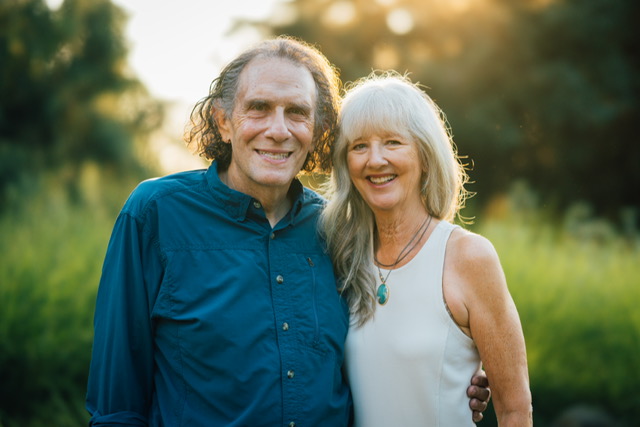
As the year comes to a close, Dan and Becky Allender continue their annual podcast tradition: pausing to reflect on the year that has passed. They share a bit about their own experiences—what they’ve learned, what they’re grieving, and what they’re celebrating—as they prepare to enter a new season.
Together, they invite you to also pause and reflect: What moments from your year need remembering? What relationships could use repair or deeper care? What desires and hopes might God be stirring in your heart for the year ahead?
We are deeply grateful for your presence and support of the Allender Center Podcast in 2025. As we step into 2026, we look forward to continuing this journey together!
About the Allender Center Podcast:
Episode Transcript
Dan: As much as I delight working with Rachael. I have my favorite, shall we say, partner today on our podcast, and that is my beloved wife, Becky. Becky, welcome as we talk about the end of the year.
Becky: It’s great to be here, and I can’t believe it’s almost the end of the year.
Dan: I know, just in some ways, I think. This is a typical phrase that old people use. It just goes so fast. Remember the days in second and third grade when I would look out the window at traffic going by Barrington Elementary School thinking it will be infinity before I get out of here. Just not the case with regard to life at this point.
Becky: Right. It seems like, you know, I was just kind of learning to do 2025 on the checkbook, and we’re gonna be changing again.
Dan: Oh, I didn’t even think of that. That’s so disturbing. Anyway, checks will probably still pass even if we do 2025. But as we come to the end of the year, what Becky and I have done over a number of years is to invite you to a process of contemplating your year. Psalm 90:12 says, Teach us to number our days, that we may gain a heart of wisdom. And I think that’s been something we have been much more intentional about as we come actually through our year, but particularly at the end of the year. There’s something about re-calling, about re-membering that’s crucial, I think, for our ability to grow in wisdom.
Becky: You’ve always loved to do that. I remember when we were newlyweds. We would remember the first five anniversaries, then the first six, then seven, and now we’ve lost count because that’s too much to remember. But I do remember that we did that every January. We would recall all of our different anniversary Januaries.
Dan: Well, I think there is something about holding the past. When the scripture says recount, count the days. You can’t count the future, but you can remember and count the days that have come to be. And I think there is a process that we have come to be doing almost every year, sometimes end of November, beginning of December to start looking at our calendar. Again, what was it like for you looking at the calendar this year?
Becky: Well, I’m old school. I have that big old calendar on the wall and I love it. And it’s a lot. There’s a lot of traveling we’ve been doing and you always love to go through the photos. You always do that before I do. So, I love that too. It’s good. It is a holy practice actually to recall, to recount and to be grateful.
Dan: I think that’s one of the things that we certainly have experienced is that sense of awe of what the year holds and then that sense of gratitude that we really do see the goodness of God in the land of the living. I love that passage that you cross-stitched early on in our marriage from Psalm 27:13. I would have despaired if I did not believe that I would see the goodness of God in the land of the living and I think that’s what we experience doing this work. But let me just recommend, even though it’s our way of doing it, we’re just giving one approach, one model, hardly saying it is the best. But I think by looking at the calendar first, you begin to get a sense of the movement of the year, depending on how you record it: appointments, trips, experiences. So I think for both of us, we begin with a calendar and at least from that point, I begin to notice certain, what I would call important moments; big events. But a lot of times, it isn’t the big event that holds my attention, it’s just something that happened on a particular day that I remember and go, that was really hard or that was really sweet. And I circle those days. And then I begin looking at a later point at my iPhone and all the photos that were either sent to me or that I took during that year. And eventually I look at yours. So we begin to kind of Photoshop the year through the calendar.
Becky: I think it’s very biblical to do that because the scriptures do remember, they do remember the generations. They do remember and we’re called to do that. So I’m glad it’s a really well-honed, is that a word, path that we do every year.
Dan: Well, and that whole notion of there is no commandment spoken more in the scriptures than remember the Lord your God or the corollary, don’t forget the Lord your God. And when we remember God, it is never an abstraction from the daily mundane, dramatic, or just ordinary moments of life. And so we really would hope, even if you’ve not done so, that you might take a few hours before this year ends to just begin just the process of collecting, recollecting something of what your year has meant. What we want to do is to use that data to begin to see what themes seem to show up. I think there is a sense in which we don’t just have stories. We are a story. And every story is a compilation of characters, places, times, plot, but in one sense themes as well. So we’re using our lives to invite you to think about yours. But if I were to say to you, my beloved, what themes did you see as you went through your calendar, photos, et cetera?
Becky: I think I saw risks, taking a lot of risks. It’s very odd to be on the stage with you where for decades and decades that wasn’t even in my thinking, let alone the plan. So there’s a lot of risk taking and yeah, that’s where, I’d start there.
Dan: Well, I think particularly as I was looking through the year, I noticed I was stopping in those places where we were on something of a stage together: in Utah at a marriage conference. We’ve been partnering with Steve and Lisa Call, doing Marriage Intensives. And I just started thinking about your voice, which has always been powerful and so rich. But I would say the experience on your part has been, it hasn’t been a lot of fun to be on the stage. This year seems like it was sweetly different.
Becky: It does feel like… there was some threshold that I crossed that I’d been trying to find for my whole life actually. And so I think having awareness of what I wanted to say and have that kind of written down was very important. That helped me not have so much stage fright.
Dan: Well, and again, if we go back to your story, speaking at the context of your family table, at a meal would never have gone well. No matter what you would have said, at least my experience with your family would have been, it would have been likely, shh, ripped to pieces to some degree. And in that, I think you’ve learned over, tragically over decades, it is better to keep your mouth shut or when you speak, there’s just been anxiety, except frankly with me, which I’m both grateful but at some level, maybe a little less because you’ve certainly been free to say things to me that have been difficult where there has been a profound voice on behalf of God. But publicly, it feels like there has been something of a shift. And I know you went and we’ve been part with friends and others, whole lot of prayer with regard to that.
Becky: I do think something happened that loosened a grip. And I think too, it has to do with, well, your attunement has always helped. I’ve always had access to speaking with you, but yes, I think there was just a loosening of of being able to speak without the terror. And I think probably that was through kindness and probably just… probably Jesus.
Dan: Yeah. Well, that has been something that I have waited for so long for you to be on stage. I remember in early 2025, the Marriage Conference that we were privileged to do in Utah, that you were having so much fun and you were so funny. And I remember having my mouth open and you looked at me in the middle of the talk and just said, you need to close your mouth.
Becky: I don’t remember that. Well. Well, I’m glad you remember that with a smile on your face.
Dan: I do. It was just such a sweet moment. And I think that’s one of the other things I would say. You can pray. You can grow. With dear friends, we prayed against some of the spiritual warfare against your voice and your mouth. But it’s just so surprising when change occurs. And I think part of that is it isn’t incremental at the level of: do what’s right, keep doing it and somehow it’ll eventually change; though that’s true too. I think it’s more so that we are meant to have this sense of just sweet surprise and awe when something shifts that we’ve been thinking and praying or working on in therapy or in counseling or in prayer. That’s what it was like for me to have that. Well, what other themes?
Becky: Well, I think in that speaking, it’s also come to speaking my mind more. And there was a few incidents this past year with both of my daughters where we’re still working on repair. We’re still circling back to what was triggered by all three of us in different ways. And that seems really hopeful. And it’s given me so much more clarity of why I could never really do that, especially with my mother and my father. And I think that’s the generations. My grandparents were parents during the Great Depression. My parents were children during the Great Depression. And Tom Brokaw calls them “The Greatest Generation,” but you know, they were preoccupied after the war, rightfully so to have fun, to drink a lot, and to have parties and get dressed up. They were very, very different parents, especially when we think about our children and how they’re parenting today. So it’s made me realize I have some more work to do and I have more healing that I’m desiring to happen.
Dan: And healing not just for yourself, but what I hear you saying is healing that has to occur with adult children.
Becky: Yes. Yes. That, yeah, there’s a lot of reparenting that’s been going on as I’ve been in therapy this year and more care for my voice, or should I say the lack of agency to use my voice? And so I think back to the child rearing we did in the 80s, it was pretty strict and I think it’s time to really circle back and realize how the times have changed, how the teaching from the church has even changed in that area.
Dan: Yeah. And what’s repair been like for you so far?
Becky: Well, it’s not been easy. And as I said, it’s continuing. It’s not like we’re like, okay, fine, we’re done. It’s not like that at all. We’ve had ⁓ the last couple of years taking our, I’ve taken our daughters and daughter-in-law to a spa to be together for three days. And so I, I look forward to having that time again, because it seems like with the extravagance of time, we can have more to talk about and to repair in many things, many things. I have no idea what I did or what I said that they still remember and is still in their bodies.
Dan: So how are you managing that? Just curious as to if repair becomes something that you look at with both daughters. And again, it’s interesting. It’s not the same with your son. But nonetheless, with your two daughters, repair has been a significant part of the year. But it also feels like It’s supposed to be a significant part of this coming year.
Becky: Yeah, I think it’s a journey and I don’t think it’s, you know, one afternoon and you get it figured out. I think there’s more and more as you don’t have the intensity of parenting that you can remember as well as their kids are getting older too. So certainly I was too harsh at times. Certainly I didn’t parent them like they might have wanted me to. And I’m realizing I never had that opportunity with my parents. And I was taking a class. We were at the International Christian Alliance on Prostitution. It’s the seventh out of the eight international conferences we’ve had the pleasure of going to. But I did a course and it talked about just the different generations. And one sentence, if I can say it correctly from memory, was that our parents didn’t grow in maturity, they just grew and got older. And I think, there’s so many new understandings through imaging of our brains. It’s so much more a time of group work and therapy and through the Allender Center, the things I have gained. It’s a different season of being human and they just, didn’t, they had a stigma, at least my family did, around going to therapy. And they didn’t have the care for their trauma that they had in childhood as well as adulthood. They just didn’t get to tell their stories.
Dan: Oh, it’s such an important point in terms of what we have learned about your mom and your dad, both of them had profound loss of their mothers. Both of them had profound loss with many family members ending up in orphanages. So as we look at your family history, particularly, there is just so much trauma that got resolved by covering it over and frankly, drinking a lot.
Becky: Yeah. And trying to like they didn’t want to tell their stories of poverty and they were with a lot of people that had a lot of wealth. They have a lot of older generational wealth so the fact that there was actually I just even found out an hour ago that my grandfather and his parents, they were in orphanages as well. So I’ve had this explosion and realization that I’ve come from two families of generations of being in orphanages. And that’s incredible. That’s a lot of harm.
Dan: And again, the point you made earlier is we are discovering things about each other. We’re discovering things about our family in ways that help us begin to have, not excuse making, not sentences like they did the best they could. The fact is we’re all called to be far more alive to the things of God. So to make excuses, frankly, diminishes not just the harm, but also something of their honor and integrity. Forgiveness is a different category than excuse making. So I think that has been something I’ve seen in you over this year is that you have through therapy, you have through prayer, you have through engagement with me and others, you’ve come to understand something more about your world. And even if you were to state it, you might have said it a year or two ago, but it feels richer and truer in a way that at least I get that privilege of being able to have the sensation of what that change means.
Becky: Isn’t that amazing? Because we’re pretty old. We’re like, we’re getting up there and still there’s more, still there’s more joy and there’s more healing and just like so much still to find out.
Dan: Yeah, well, the ancient nature of our lives will be my transition. I think that’s one of the themes I saw. As I looked at portions of our summer, it dawned on me. We had about four weeks where we just did a lot of fun things for three or four days here, then we’d be home, or four or five days somewhere else, we’d be home. And during those times of coming home, I was exhausted. It became clear to me that it was hard to recover from having fun. That was a whole new theme that I had never seen before. You know, I’m aware that if I cut myself shaving, it takes longer as an aged one to to heal. But I never really noted that I was exhausted after having really pleasurable experiences and that I need more time to heal from difficult times, but also from sweet and good times.
Becky: It’s just your capacity is a little bit less. And that, that is something we’re counting the cost because we are saying, okay, as we plan this next summer, we have to have more recovery time because by the end of three months of summer, and then our daughter and her husband and daughters come to stay with us for two weeks, we’re toast. So we’re learning.
Dan: Well, and what I also noted in the need for recovery, not just from difficult times or from certain levels of ministry exhaustion. What I noted is that what really bugged me was I couldn’t be efficient. I couldn’t plan my time to do the things I thought I could get done. And I began to note that I need to sit and look out the window for far longer. I need to sleep a whole lot longer than what I’ve ever really noted. And that frustration, if you will, the refinement of you must let your body, your heart, your mind, in some sense, distill.
Becky: I know. And I think that’s really a lot of joy. I think, like, yeah, we like watching birds. I remember my grandmothers, both of them liked birds. Well, we’re in the season of really liking birds. We’ve got eagles, we just have birds that fly all around our house on all sides. And I’m like, oh, this is part of God’s plan because if we need to restore, if we need to slow down, we’re seeing so many more things in nature and learning so many more things in nature.
Dan: Well, when you’re moving as fast as we have at times, it is very hard to take in the particular, the small. And I think because we’ve been sitting, I’ve looked at our summer at certain portions, we were on the porch a lot. And a lot of that was just rocking and looking. Things that I would have thought, that’s what old people do.
Becky: Well, surprise honey, We’re in that category.
Dan: Right, I’m wondering how often I missed when I was younger some of the beauty, some of the complexity, and some of the goodness of God in the land of the living by being so intentional, so efficient. But I think the loss of efficiency has brought me to a new level of having to bless the loss of control. And in that process, I can say a second theme that’s come again and again. And I would say it’s the word replacement. I started noting how many things in our house needed to be replaced. I won’t go through the whole list, but the oven, the dishwasher.
Becky: But you are going through the list. Oh my goodness,
Dan: But not the whole list. But, you know, beginning to go. Well, we’ve been in this home 27 years. It’s just incredible. I mean, it’s the longest we’ve ever lived anywhere in our lives. And I didn’t know you had to replace a roof. I didn’t know you had to replace.
Becky: You know what, Dr. Allender, you are in your head a lot of the time that you miss out on common knowledge.
Dan: Well, thank you, Mrs. Allender. But let me just go back that having to be aware that everything old will have to be taken over by something new. So the replacement process isn’t just, you know, the appliances in our home. What I’ve begun to note is how many things in the Allender Center I’ve been relinquishing to really remarkable people. And as I look at the last Narrative Focused Trauma Care weekend that we did, I did an hour and a half out of three days of teaching. And what was being covered was brilliant by younger men and women. And what they did was so sweet. But in the same way that I felt, I’ll just admit, a certain level of irritation that I had to get a new oven and a new dishwasher. I was a little bit irritated like, wait a minute, I’m being replaced and there is something so good about it. And yet owning that you are old doesn’t mean you don’t have place or a purpose, but you don’t have the same place and power, the same efficiency, the same capacity that we had once. I know this is so painfully obvious, like it took you this long to get this? And the answer is, you better believe it. But there’s something new about being able to hold something of the grief of that loss, but also the incredible sweetness of seeing brilliant teachers do better in the context of their teaching than I would have done if I had the same topic. There was something so, I felt so much pride, so much joy in watching exciting. So exciting. I know. And you love coaching and encouraging teachers. And I love that you’re doing that. But I think that replacement process got a little clearer. And it happened to be today that we went over to Seattle to meet with a surgeon because I’ve been having what I thought to be a frozen shoulder. And again, if you’ve ever looked that up, it is not a pleasant process. It can last years in order for it to heal. Well, I guess I got good news and bad news today. The good news is I don’t have a frozen shoulder. The bad news is there has been a loosening around my full metal replacement that I had three years ago. And the surgeon very kindly and very directly said, you can live with your impairment. But if the level of pain is as you seem to indicate, you’re going to want to have a repair of that surgery. And so even there, the replacement.
Becky: A revision of your shoulder. Yeah. You know, we just got to hang tough and walk through the next thing.
Dan: Yeah. But I think there’s a constant awareness that relinquishment for most of us is but loss. And in that relinquishments, letting go, surrendering, it feels and it should feel to some degree like a loss. But then I began to imagine, all right, what will I be able to do if my shoulder is further healed? What will I do if those who are teaching continue to teach as well? What does it free me to begin to imagine doing alongside of them or in other realms? So I think there’s always this interplay and folks have heard me say this a thousand times, but to say it again, you know, when you’ve got this passage in 2 Corinthians 4:10, Paul speaking, we live every day, we live every day in our body, the death of Jesus so that we may live as well in our body, the life of Jesus. So that interplay of this year has held a loss of a number of friends to death, dear, dear friends suffering significant, far more significant physical ailments than we have had. Yet in that, we have had our own suffering. And in that, there is loss. There’s loss of control, loss of efficiency, just a loss and relinquishment. But there always, always is the promise and something of the defiance of the resurrection. We are ailing and we are in some ways becoming less than who we would have been. But Paul also speaks in that chapter of a decay process, but also the renewal of the inner person. So I think that’s where I know our lives have been. You know, I’ve been burdened for you having to tend to me through the process of what was called Turp surgery. Now we know you’re going to have another significant period. So what we do in holding suffering together is ability to be able to enter into a level of presence and care. And I think that’s where I look at this year and be able to say we have seen more of our finiteness, certainly more of the issue of mortality. But in that, I think a growing freedom that feels defiant to all the powers and principalities that would want for us to feel overwhelmed or just despairing or why me? Those parts are there for both of us, but not primary. And I think as we look at our year, I certainly have felt something of that goodness. So for you, what do you see ahead for you as you look at 2026?
Becky: Well, I guess I will be caring for you. And I think what I loved about three years ago, your shoulder replacement was I chose to look at you as an infant child. You’re listening to see if you need anything. You know, that kindness that you have for an infant, a toddler. You know, it’s so sweet. So I feel like we’re kind of returning to that sweetness. Only this time it’s to one another because there is less capacity, because aging does cause a different attunement and a different cherishing and a different applause for one another for what we see the other doing that isn’t easy to do.
Dan: Agreed, agreed. Anything else? I’m going to prompt it, if you don’t.
Becky: Well, I guess we’re skiing again before the shoulder revision. And we do have an Atlanta church conference, a Dallas church conference. Where are you headed? I don’t know where you’re headed.
Dan: I don’t want to even look. That’s one of the ways we’ve survived. It’s not looking too far ahead, but living within something of the range of the next week or two. So one of the things that I thought might come to your mind, but this has to do with your voice and what I would say, you’ve made a commitment in the year 2026 with regard to your book.
Becky: Oh yes. Well, I’ve wanted to do that since 2017 and now it seems like we have the finances, so you say that I can do this. So I think that will be good because, you know, it’s another circling around back to a lot of work that I did in writing the book. It’s kind of happening again with adult children and with learning more about, well, the body, the brain, you know, what really brings healing. So yeah, I think that will be something to look forward to.
Dan: Okay, well, it was in 2025 that we did, we went over from our home on Bainbridge over to Seattle to a lovely studio to record the book,
Becky: Deep-rooted Marriage.
Dan: Yeah. And you watch me do what was torturous. I don’t read well and there’s so many mistakes. Then you read. You had one or two mistakes.
Becky: I had two mistakes, but you read a lot more than I did.
Dan: That’s not the point.
Becky: Well, you know, anyways, yeah.
Dan: So I think that was the moment where I saw you begin to kind of go, I think I want to record my book. You might want to say, what’s the name of your book, Becky?
Becky: Yeah, Hidden in Plain Sight. So, yeah, yeah, I think there’s so much joy in reclaiming what the enemy stole or still tries to steal or reclaiming goodness and kindness for yourself because a journey on planet earth… it is no easy course that we’ve got to run down here and so i think there’s just you know as much as i used to kind of not not want to be part of your psychology, the profession. I was more of the sociologist, but yeah, there’s always more. There’s always more. So I’m excited about the new research that’s out there and I want to be a part of the learning that will not only be enjoyable, but hopefully will also reflect in the way I react to you and everyone.
Dan: Well, when I think about what the year holds ahead for me, surgery will likely be in, sometime in March. So I know from the past surgery, it was about four weeks to literally find my feet. And so apparently the repair of that surgery, as he said, will be a little more difficult than the initial surgery.
Becky: Double, said, let’s not mince words.
Dan: I prefer the phrase a little more. But you’re right, double. So if three to four weeks, four to eight weeks, and just being aware that already I have to surrender that much more. I think there’s themes that we can see to a particular year, but there’s also themes to seasons. And I think this is a continuation of that. But we’ve also talked about taking some significant time to hike. There’s just something for us about walking. And I began to look at things like Nordic walking. I know that’s crazy. You can’t see us, but I just got a adolescent…
Becky: Well, there was a woman on the ferry, both coming and going, and she walked around the ferry, which is pretty large. mean, inside the ferry with her poles. Now you say these other poles actually have gloves that you put your hands attached.
Dan: They aren’t just hiking poles.
Becky: It sounds really ridiculous. Okay. But I know you love to get all the calories you can.
Dan: But there’s something about looking at something as simple as we love walking. Why not take it to a new level?
Becky: Oh good grief. Let’s just go to some lovely mountains with trails.
Dan: Well, I’m all for that. But I think we should be doing with our Nordic sticks.
Becky: Of course you do. And you said we needed to get some instruction. How you can make walking hard. We’ve got months of like instructors helping us.
Dan: Well, no, no, no. I told you it was only one or two lessons to make sure that, particularly with Nordic sticks, that you’re walking in a way that’s consonant with how Nordic walking, particularly in the Nordic countries, but also in Europe, is actually incredibly invigorating. I know, I just, I wish I could capture something of the adolescent eye roll that I am, but.
Becky: The bike riding, the motorcycling. You just take it always… a little bit extreme.
Dan: And yet we still have themes that have to be, if not honored, at least to be acknowledged. So, even though, at least at this moment, that’s just an idea. I look forward to being able to just do more hiking, being able to walk, to be able to walk in the context of the mountains that we have in Washington, the Olympics, and
Becky: the Cascades.
Dan: So to be able just in our own backyard to be able to go for a day rather than just an hour walk. So, even though…
Becky: You know what? I think it’s so great that you’ve got these new teachers who are doing brilliantly. So that will give us more time.
Dan: To go walk! Well in that you know the playground of what we get to do in the Allender Center is one of the gifts that as a 73 year old man, who will be 74 in the next year, I look at and I go, how many people get to continue to do what they love to do and do it with people they love for the purpose of love that is the kingdom of God? That’s where I look at our lives and I go, we have so many gifts. So before we end, I’m just curious, given that this is before Christmas, anything you want to say to me about what you’re thinking of as a gift? And you don’t have to.
Becky: Do these Nordic poles come in different colors?
Dan: I don’t know, because I’ve just started investigating. Do you want your Nordic poles to have a certain hue?
Becky: Well, we’ll have to look at them together. I would like some Nordic socks, though. I’ve been seeing those on Instagram.
Dan: Alright, so we’ve got categories at least to be able to go. Now, I know that this will be a bit corny of a turn before we end, but what I’d love to do is to invite you to think about what you would like to give as a Christmas or New Year’s gift to the Allender Center. Our podcast needs support and financially, we have not actually invited you as an audience often to actually become participants in gift-giving to honor the amount of labor to be able to produce our podcast. And so if there are any impulse, if there is any impulse to be able to do so, we’d love for you to visit theallendercenter.org and look under podcast where you can click to become a podcast supporter. And again, whether it’s a gift of a few dollars or, you know, two, three, 400,000, we would consider any gift to be a remarkable reminder of the goodness of God. And so this year has been a gift, my love. It has been. And a gift that I look forward to a full year of 2026 with you, my co-host. Happy New Year to you.
Becky: Happy New Year to you.