
Teen Mental Health and the Power of Connection with Dr. Chinwé Williams
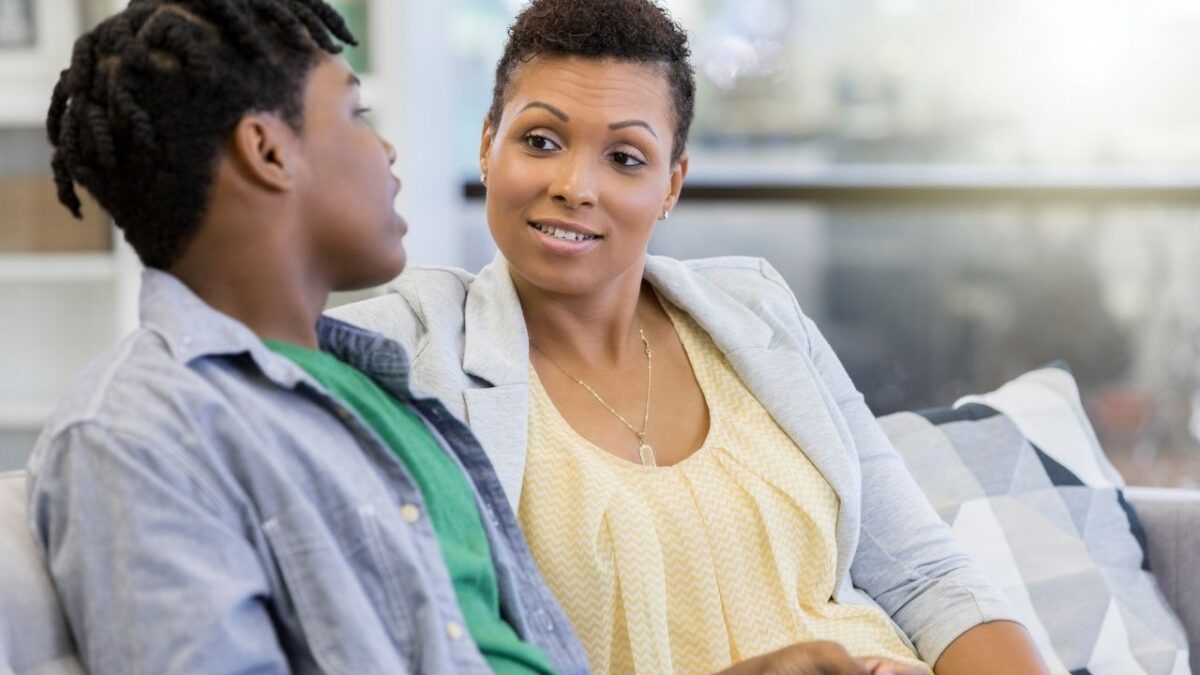
Today’s teenagers are growing up in a world of both unprecedented connection… and disconnection. Teens have constant access to information, social media, gaming, pornography, and now AI. They can turn to a screen for advice, distraction, or even a sense of social connection. Yet many teenagers are feeling increasingly alone, while anxiety, depression, and self-harm remain prevalent concerns.
At the same time, the adults in their lives are often overwhelmed, disconnected, and dysregulated, too. So how do we offer authentic connection to teenagers in the middle of all this?
Dr. Chinwé Williams joins Dan Allender and Rachael Clinton Chen to explore what teenagers are facing and how the adults around them can respond. A therapist, author, and expert in adolescent and family wellness, Dr. Williams is also a parent of three, bringing both professional expertise and personal experience to the conversation.
You’ll hear more about:
- how to notice the need for connection underneath a teenager’s difficult behavior
- why fury to curiosity can change the way we respond when a teen pulls away, shuts down, or acts out
- how small moments can build connection over time
- how repair matters when we miss
- how our own regulation and presence can help teenagers develop resilience
Whether you’re a parent, teacher, mentor, grandparent, or anyone with a teenager in your life, this conversation offers a grounded look at what young people are facing, as well as very practical ways to stay connected to them in the middle of it.
About Our Guest:
Chinwé Williams, Ph. D. is a Licensed and Board-Certified therapist, speaker, author, and consultant. She is a former graduate counseling professor, college and high school counselor, and executive coach. She is currently a trainer and consultant for K-12 schools, non-profit, for-profit, faith-based, and corporate work settings. Dr. Williams is a frequently invited expert blog and podcast contributor.
Her expertise lies in areas of adolescent, family, and women’s wellness, stress/anxiety management, and trauma recovery. Dr. Williams is the owner of Meaningful Solutions Counseling and Consulting, where she maintains a growing private practice in Roswell, GA serving adolescents, young adults, individuals, and families.
Dr. Williams is the co-author of the best-selling books Seen: Healing Despair and Anxiety in Kids and Teens Through the Power of Connection and Beyond The Spiral: Why You Shouldn’t Believe Everything Anxiety Tells You and author of the recently released Calm, Courageous and Connected: A Parent’s Guide to Raising Emotionally Resilient Kids.
Learn more and connect at: drchinwewilliams.com
Listener Resources:
- Check out books from Dr. Chinwé Williams on her website: drchinwewilliams.com/books
- Dr. Williams mentions the work of Dr. Rick Hansen. You can find out more here: rickhanson.com
About the Allender Center Podcast:
For over a decade, the Allender Center Podcast has offered honest, thoughtful conversations about the deep work of healing and transformation. Hosted by Dr. Dan Allender and Rachael Clinton Chen, MDiv, this podcast explores the complexities of trauma, abuse recovery, story, relationships, and spiritual formation. Through questions submitted by listeners, stories, interviews, and conversations, we engage the deep places of heartache and hope that are rarely addressed so candidly in our culture today. Join the Allender Center Podcast to uncover meaningful perspectives and support for your path to healing and growth.
At the Allender Center, we value thoughtful dialogue across a wide range of voices, stories, and lived experiences. In that spirit, our podcast features guests and hosts who may hold differing perspectives. The perspectives shared on this podcast by guests and hosts reflect their own experiences and viewpoints and do not necessarily represent the views, positions, or endorsements of the Allender Center and/or The Seattle School of Theology & Psychology.
To become a supporter of the Allender Center Podcast, click here.
If you and your organization would like to partner with the Allender Center Podcast, please reach out to Clay Clayton at cclayton@theallendercenter.org
Episode Transcript:
Dan: I just want to talk about this woman’s character, but I need to just say that Chinwé Williams, Dr. Chinwé Williams, and a profound author will mention a few of the books, an incredible presence and speaker and therapist and I could be introducing her for forever. So I’m going to say a few more things about your books, Chinwé, but I just want to start by saying thank you so much for joining us.
Rachael: Yeah. Absolutely.
Chinwé: I’ve been looking forward to this kind of like all summer.
Dan: Oh, thank you. Well, as well, let me just start by saying I’ve had the pleasure of being on a… the word we would use would be a platform, a speaking platform, with Chinwé. And each time I have had the privilege of listening to you, I’ve kind of forgotten what I’m supposed to say because I get so enchanted by what you say. And that’s a problem because I really am somewhat disorganized to begin with. And so to be so enchanted, I forget what I’m supposed to do is an issue. So again, you are a counselor educator from Georgia State University. And to begin just saying, the books that you have done certainly are, if I can just get a broad focus, about teen anxiety and work and depression, parenting, and the reality of what it means in the midst of all this to really come to a place of what it means to trust Jesus. So again, to say the book “Seen: Despair and Anxiety in Kids and Teens Through the Power of Connection”, the word connection is obviously a very important word because it shows up in a second book “Beyond the Spiral: Why You Shouldn’t Believe Everything Anxiety Tells You”. I love that book, but I also just love the title. It’s just like, yeah, damn it, I shouldn’t believe what anxiety brings me. And then your most recent, “Calm, Courageous, and Connected”. So just to say, I have so enjoyed being with you and so thank you for joining. But Rachael, what would you like to begin with with this remarkable woman?
Rachael: Well, first of all, as a stepmom to two beautiful teenage boys and a bio mom to a three, almost four-year-old, and someone who has enough, I’m not a clinician, but I am fortunate and sometimes not fortunate to be surrounded by clinicians. I know so much, but I feel the overwhelm of being a parent in this era. I find myself constantly looking for resources or other people who could say, you’re not crazy. It’s an overwhelming era. Or some of the language I found in your book to be so helpful. We might really be in an age of anxiety and you’re a researcher too, so you’re basing it in research reality, not just anecdotal feelings. I first just want to express deep gratitude for your faithfulness and your presence and your vulnerability to do this work as a parent yourself and to create these resources. I’m just so struck by one of the phrases in your book that I loved because as a theologian and probably pastor by orientation, I’m always telling people we’re wired for love. This is how God made us for better or worse. And you talk about your book around just connection being so pivotal and you’re talking about attachment, but you’re using a word that’s so accessible, connection. But you say neuroscience has finally caught up to biblical wisdom. We are literally hardwired by God to connect. And you’re talking about in some ways some of the harm that comes with disconnection. You say that’s why disconnection and exclusion are incredibly painful both physically and physiologically or psychologically. And you’re making these beautiful connections to Biblical wisdom. So just as a start, I just wanted to express gratitude for just deep labor that’s both informed by science and so deeply theological. And so I would love for our audience to hear a little bit more from you, some of that research, some of the findings of what are we dealing with as parents of children at such a time as this?
Chinwé: Yes, yes. We are dealing with excitement that comes from not knowing exactly what to expect from the world, from our teenagers. There’s a lot that teens are struggling with. So by the way, I’m grateful to be with the two of you. I can echo the exact same sentiment, just the resource that you are for so many people, for so many years. When I mentioned that I was going to be sharing on your podcast, people were super excited and I have been to conferences where friends of mine have said, “I’m going to be there.” And I’ll say, “That’s awesome. I can’t wait to see you.” And then they’ll say, “Are you going to be there? I’m here to see Dan.” I listen to him and Rachael all the time like, “Oh, you’re going to be there too?” So this is just a pinch me moment. Okay, fine. Got that out of the way. Back to teenagers. So I am not just a mental health clinician. I’m not just a researcher or somebody who consumes research. I am a parent of a 21-year-old, might as well be a teenager and a 15-year-old and an 11-year-old. So right in that pre-teen phase, and by the way, that’s really when adolescence starts. So I always tell parents and teachers and ministry leaders, if you start to notice a shift at 10 and a half or 11, guess what’s happening? They’re finding their autonomy, their independence. So back to your question, I started my career working as a high school counselor in an incredibly diverse school district that had only two high schools in the city in the entire district. Clark County, Athens, Georgia. Shout out to everybody there. Learned so much. I was a baby when I started and I thought I had to have all the books, all the manuals, all the knowledge, and I thought I had to sort of prove my expertise to these young people who were barely younger than I was. And what I quickly learned, and when I say incredibly diverse, I mean racially, ethnically, different religious traditions, but also socioeconomically. We had some of the kids from the wealthiest homes in the city at the school and many kids who lived just across the street in public housing buildings, which I didn’t live so far as a teacher, school counselor, not making a lot of money. I wasn’t so far from them, and it was just an incredible experience. What I learned with all of my books and manuals in hand was that they didn’t care anything about that. They didn’t care about where I got my degree, which I was very proud of. My African parents were very proud of. They could care less. So one of the first lessons that I learned that year was that kids cared less about what you know and more about the fact that you care. So I did not have neuroscience as part of my master’s degree. Later in my doctorate degree, I had just had a master’s at that point. I learned so much more about presence and connection, and I’ll share some of that with you and your audience. You all know this already, but I am seeing teenagers now in my clinical practice. I’m working full-time as a private practice clinician and travel and speak and write books. So I’m not at Georgia State anymore, but I’m seeing a lot that’s different from 18 years ago when I started my career as a school counselor, depression was the number one mental health condition. I saw kids dealing with difficult home environments. We would use the word dysfunctional at that time. I say difficult. They were navigating so much, and I’m talking about my wealthy kids and also kids that were on free and reduced lunch, navigating so many, in some cases, different sets of problems. And then there were a lot of overlap as it relates to trying to make a friend, trying to figure out what they’re going to do in the next phase of life, trying to get through high school. So fast-forward to today where I have a practice where I still see teenagers, I see many more adults. Interestingly enough, I have a couple of people on my caseload that found me years later and said to me in their little write-up, “You were my school counselor.”
Dan: Oh, so sweet.
Chinwé: No, Dan. I said, “I can’t be that old.” You must be mistaken. And then they sent me a picture and proved it. So I have folks that I counseled back then as parents of little kids right now, and they found me on social media. So it’s wild. So I often reflect on what has changed. So teenagers, Rachael, back to your question, they are growing up in a world where they are hyper connected. They’re more connected than ever digitally. And yet my experience has shown me that they feel more alone. They feel more isolated than perhaps any previous generation. Their nervous systems are dysregulated because they’re trying to navigate enormous uncertainty because that’s kind of what has been unfolding in our world, especially in the past six years. I love that you two use the word fragmented. In Christian circles, we say broken. I love fragmented because it really does speak to the opposite of connection. There’s some disconnection there and things are happening that’s really scary that have always happened, natural disasters, ongoing war, conflicts in the home, in the community. But what’s happening is that kids are able to see that in their palm, whereas before that wasn’t the case. So that is happening and they’re wanting to achieve, they’re wanting to belong, they’re wanting to be of purpose and have a purpose. That hasn’t changed, but what’s changed is the social media piece. And this is really important, and I know you two talk about this, they’re also lacking enough emotionally attuned, present, regulated adults in their life to help them make sense of what they’re feeling. Because guess what? We’re dysregulated too. Quick story, went to my dentist to get just a regular cleaning and it was actually, I won’t give all the details, but my dentist was saying, I noticed something on the wall. It was a signage, a plaque that said something about “be kind”. I was like, “What? I’ve seen this at the airport. Be kind to fellow passengers, be kind to flight attendants…” And that came up a lot in 2021, 2022. I’d never seen that before and that’s because people weren’t very kind, but at my dentist’s office. So I said to her, “I don’t remember seeing that before.” She said, “Yeah.” She said, “We are seeing a lot of people upset, irritated, agitated, arguing, sometimes being almost getting to the point of physical aggression.” And I’m thinking to myself, I mean, going to the dentist isn’t fun, but to the point of physical aggression. And she said, “Yeah, something has shifted in the last five to six years.” So this is just one tiny little excerpt that so many people have their own examples of how we as adults are dysregulated, feeling disconnected, more easily angered. And then on top of that, kids are experiencing a ton of stress. The reasons that kids cite, teenagers and younger kids cite for their stress, school pressures, academic pressures, social pressures, feeling the constant comparison that comes from being online or living their lives online. Kids are turning to the internet, they are turning to AI for social support, for emotional connection, for advice, for privacy, for confidentiality, because if I tell my mom, my friend or my therapist, it might get out. But if I tell Claude or ChatGPT, who are they going to tell? And so that’s a mixed bag. Girls are turning more to social media or boys are turning more to gaming sites. Dan talks a lot about just the influx and the pervasiveness of pornography online. So we know that the more time kids spend online and less time they spend with attuned regulated parents, the greater vulnerability they have to anxiety, to depression, to self-harm. So that’s what we are seeing, and there’s a lot that we are seeing also post-COVID, and we can get into that if you want, Rachael.
Dan: Everything that you’re saying, I know to be true, and I find myself, even though I don’t parent the way the two of you are, and I feel the weight as a grandparent for my 17-year-old grandson, my 15-year-old grandson, my 13-year-old granddaughter, et cetera, and the reality that I do think this is the hardest era to parent in the history of humanity. And again, I can easily hear people scoff at that, but to say there has never been more ubiquitous opportunities to have a global reach while losing the centrality of connection with people within a block and just the weight, the polarization, the cruelty, just absolute cruelty. The only benefit to me of going to the dentist is I always get gas. It costs more. It doesn’t get managed by insurance, but when I go in for even teeth cleaning, I just go, “I need gas.” And they go, “You’re not that anxious.” I’m like, “No, I just want a legal high.” And so I’m not sure that a belligerent attitude could not be addressed. I think more people need gas. But your thoughts, Rachael, before I go any further on my addictions?
Rachael: Well, I’m just thinking about what we’re putting words to. If this is such a hard time, you name one of the reasons you wrote “Calm, Courageous, and Connected” was to equip those who are leading kids, whether it’s parents or all the various adults in our lives. I’m just thinking back to when I was a kid, the aunts and uncles and teachers and ministry leaders and mentors, just how important all of those adults were in my world, that it’s important that we’re helping kids grow resilience through connection. But what you’re putting words to is you kind of need healthier adults, more regulated adults in order to do that. And when I was spending time with your book, I was feeling myself really weepy. I was like, I’m crying. And I just think we’ve named this, but we’re touching on something that does feel really sensitive. And in some ways we need, as an adult, I’m like, I need safe, secure connections in my world in order to say… I’m just thinking how unhinged I feel this season. Now, part of that is we are having mold remediation, massive mold remediation reconstruction done in our home. And in my own highly sensitive person, probably some OCD, certainly a long history with anxiety, my house and my place has always been like, okay, there’s a little bit of control I have here. I can keep this orderly. I can make it beautiful and welcoming. And for about four and a half months now, I am every day radically accepting that is not possible right now in the fullness of our home and the way I want it to be. I just am noticing, man, you talk about in your book, what happens when our resilience hits a wall. And so I’m in a season where just even on a very ground level, let alone what’s happening in the world, I have felt my resilience and my resistance hit a wall. I was outside the other day, we had a package thief, happens quite frankly often in my Philadelphia row house living. Just your front door is three feet from the road. It’s just part of life here in Philly. And I found my night guard cleansing tablets on the sidewalk by Gospel Temple Baptist Church, and I was with my three-year-old and I just picked them up and I screamed, “Quit stealing my things!” And my daughter is like, “Who are you yelling at, mom?” And I’m like, I’m sorry, this is very terrifying. We’re out in public. I’m just screaming into the void. Someone’s stolen things. That probably feels threatening. Just here I am like, okay, this is where we are. And it feels very much like a metaphor. So I think it would be helpful if we want to talk more about COVID, wonderful. I think that would be helpful. But I also just think what are some of the ways in the midst of our own resilience hitting a wall, in the midst of feeling like do we have the resourcing we need? What are some of the things we need and our kids are needing when it comes to connection? Because sometimes we just have to demystify what that is because we can’t really change the overwhelming that we can’t solve the problem of AI. Maybe we can. There’s little things we can do, but it just feels like there’s some things that I can find myself going, well, if I could just deal with this, then I could be a better resource for my kids. So what are you finding with the parents you’re working with and your own parenting? What’s possible?
Chinwé: Yeah, I love that you both mentioned the word resilience. And so I am having lots of conversations with parents who have hit the wall of their own resilience and struggling with kids who they’re wondering about their resilience. And so I find myself kind of repeating my definition of resilience and reminding parents that it’s not whether you have it or you don’t, it’s really the capacity to adapt through hard stuff. Yes, recover a little bit, definitely grow, but we can’t talk about resilience and parenting in our teenagers without talking about hardship and screaming in the night and screaming out in the neighborhood, “stop taking my….” We get to that place and that’s okay because resilience is actually forged in that place in the context of challenge and how we respond to life’s challenges. So in other words, I tell parents, “Hey, if you don’t have hardship and if your kids don’t have hardship, there’s not an opportunity for resilience to emerge.” And it’s how we grow and move through the hardship that’s going to reveal that resilience. And so it’s not something that you have or you don’t. It’s cultivated through family. It’s cultivated through culture, resilience. It’s cultivated through this vehicle, what we’re doing right now and what you’re offering to parents and caregivers and grandparents saying, this season has been really hard and this is what I’ve been met with and this is how I’ve handled it. All of those things play a role, but certainly our immediate environment, the people that we see on a daily basis help tremendously. So kind of bringing it back to parenting, when parents can offer themselves and also their children, their spouses, their loved ones, calm, attuned presence, that just helps everybody make sense, a little bit of sense of the difficult experience. But it’s really what you’re doing is you’re modeling to your kids that life is really hard and I am not going to respond to it in a textbook fashion a hundred percent of the time. I’m going to have my own meltdowns. And so what you’re doing by responding how you’re responding, correcting what needs to be corrected or repairing what needs to be repairing and moving through it is actually not just providing. And even physical comfort, hugging your child in the moment of your own frustrations or theirs, what you’re providing is not just comfort, which is lovely, but you’re rewiring their brains. You’re actually rewiring their brains and your brain for resilience over time. So I talk to parents about the family stress model. I talk to Christian counselors, I go to conferences and I talk to them about the family stress model. And when they say, what’s going to help? How do I help parents? What interventions are available? I say to them, just keep in mind the knowledge that stress begets more stress in families and you’ve got so much going on, Rachael, in your home and that feels so disruptive. And then the weather, so your sweet girl is missing her swim classes and probably a plethora of other things that you just don’t feel the need to mention publicly. That’s the case for me. I’m sure that’s the case for Dan. So grief, loss, financial instability, discrimination, when I think about marginalized communities, marital challenges, all of that can have a spillover effect and can lead to stress, not just for the marital unit, not just for the parents, but can cascade and negatively impact our kids, our teenagers. So just having that knowledge as a helper, as a ministry leader, if you’re listening right now and you’re working with teenagers and their families, because having interventions that target not just the teenager, but the family system, and that’s what all of my books really have been about, I hope, because the family system is strained. Parenting is actually considered by the surgeon general, the last US Surgeon General said that it was a parenting epidemic. Parenting is in crisis. People are freaking out because now they have knowledge of mental health and they’re like, okay, am I well? But then I also have to worry about my kiddos being well and the world doesn’t feel very well. So parents have a lot that they’re contending with. So on a very, very practical level, you two talk a lot about stories, and I like to bring in neuroscience. So yes, adversity, COVID, war, marital strife, separation, divorce, all of those things affect our kids. They affect us and they’re embedded in our nervous system. They’re embedded in our bodies. But the beautiful news is that relational experiences can literally reshape those stories or as we call it, patterns, patterns of behavior. So one of the hopeful things that neuroscience has offered to us, and I love to share this, is that secure attachment does help to rewire those patterns. It helps the body, it helps the brain, the nervous system to respond better to stress over time. And when people ask me, “Okay, everybody talks about attachment, give me a simple definition. What is attachment? Is it gentle parenting? Should I sleep with my kids? Should I kangaroo them when they’re born until they’re 15?” No. No. Kangaroo carry them, right? No. I view attachment in a very simple way. Attachment is the answer to one simple question that a child, and by the way, a spouse asks a thousand times, when I need you, will you come? When I need you, will you come? I’m feeling tearful. We’re human, right? We’re human. But that question comes up a thousand times. When I need you, of course I’ve got to let you know I need you. I’ve got to communicate it, which kids do behaviorally. They’re not always going to verbalize that. So that’s where the observation comes in as parents. “Will you come?” And here’s the beautiful thing that I really want everybody to get. Every consistent yes, not a hundred percent of the time, but every consistent yes will shape neural pathways in the brain towards security. But we do the best that we can, and sometimes we have to say no, and sometimes we’re not paying attention, and sometimes we have to scream into the neighborhood. But if there’s a slew of repeated nos or not paying attention or I’m on my phone or I’ve got to achieve, I’ve got to strive, I’ve got to get on another plane consistently, then the child, or really I say the nervous system, will wonder, am I really safe? Am I really safe? I know I’m loved. That’s what teenagers say to me all the time. I know my parents love me.” And then I say to them, “But do you feel it?” And that’s sometimes a different answer.
Dan: Well, when I think about how important you have underscored, and I think so brilliantly, the necessity for connection, and then as I’m thinking about watching my 17, 15, and 13 year olds with their parents, but also with me, there isn’t what I would call a real clear call for connection, meaning they’re on their phones. And even walking into a room where I haven’t seen them in maybe a week, there isn’t like, “Oh, papa, hi.” It’s… I have to initiate and even the initiation doesn’t go what I would call in a kind of mutually connected way. And there’s a part of me, and again, I’ve never claimed to be very mature, but with a 17-year-old in particular, if he doesn’t greet me, I throw myself on top of him, and I’m not a particularly small human being. And so he’s at least come to know I have this several hundred pound force about to land on me. He’s gotten a little warmer, but not a lot. And so when you go connection, yeah, well, it feels like a one-way street and it’s so easy. I can feel that my body right now are kind of like, oh, whatever. Let your parents deal with you. But I’m like, I know that’s not who I am and what I want to be, but how are you helping me and others deal with this sense of relational indifference, disconnection, focus on an attention on a game or on a phone that feels like it ruins any possibility of meaning?
Chinwé: Yeah. Well, I always like to point out what’s happening developmentally. And what we know about adolescence is that it’s a very turbulent time biologically, physically, emotionally. This is a time where kids are seeking young people, right? That’s that in between stage where they don’t want to be referred to as kids, but they’re not quite adults and they’re seeking a lot of autonomy and independence. So they’re pulling away and they’re actually pulling very much and sometimes violently toward their peers. This is a time when I’m talking to parents, I say, when they complain, “My kid’s door is always closed.” I say, “Open the door. I need to know what you’re doing. What’s happening there? You’re not coming down. Grandmother just walked through the door and you didn’t even greet grandmother.” And so Dan, you’re lucky your grandson was just in the room. I’m hearing that they’re just like, “I love grandma, but I’m doing this.” So this is also a time when a lot of young people are seeking privacy. And so we want to sort of honor what’s happening and there is a lot of tension. So I say, go into their internal world. Yes. And I’ve been there too. I will get a stiff hug. And my 15-year-old, by the way, has autism too. So we had to teach him how to hug. He gives very stiff hugs and he kind of bumps his forehead against yours. I’m like, “No, baby, your arms go around me.” So that’s more of a function of his neurobiology being autistic versus being an adolescent. But I’ve had parents of typically developing adolescents say that it’s hard to get that hug. It’s hard to get that connection. It doesn’t feel like a two-way street. So what I say to them is that the brain changes through repetition, not intensity. So you just keep showing up, you keep showing up. And are you two familiar with Dr. Rick Hanson?
Dan: No.
Chinwé: Oh my gosh. He’s got a great small book. I can’t remember the name of it right now, but he’s not paying me, so it’s fine. Nobody pays me to mention their books. I’m just going to mention mine. And I don’t even know that I’ve ever referenced him, but he’s coming up now. He talks about, he’s a psychologist and he has a framework called Heal. I won’t go through all of it, H-E-A-L. It is a beautiful framework and I share with my trauma survivors all the time. So it’s probably worth taking a look at some of his work and he’s all over YouTube. But for what we’re talking about today, he wrote about a concept called savoring. Savoring, which I know the two of you know this very well. When you find those imperfect moments of connection, however fleeting with your teenager, be sure to savor it. And he even gave us a dosage, 20 seconds, which feels like forever to hug or touch or look into your child’s eyes. So whatever you can get, hold onto it. And this is what I say to parents, don’t wish for those times to… Don’t think during those times, oh, when is it going to end? Or am I going to get this again? And they’re growing up and they’re going into their senior year. I have a lot of parents kind of freaking out about, have I taught them everything that they need to know? Find out what they’re interested in. Engage them in those activities, not on your terms, but on their terms. And when you find those moments of silent connection, maybe they’re not sharing their life story or their boyfriend and girlfriend problems with you. Maybe it doesn’t feel like intimacy, but you’ll sense the intimacy. When you find it, savor it and maybe breathe it in and take 15 to 20 seconds and then say to your teenager, I love being with you. I love being your grandparent. I love being your mom. And you will be met with an eye roll at times. My kids now will say, I love you too, mom. They’re used to it. But again, the brain changes through repetition. But in the beginning it was awkward, it was stiff. So it’s not about a perfect moment really. Repeated experiences matter so much more than perfect moments. And that’s what I want parents to do.
Dan: Well, and what it does for me as I think about this is the last time I was with my 17-year-old and he looked at me as I was moving toward him and he said, “Hi, Papa, don’t jump on me.” And it was actually said with a little bit of playfulness, not just a command and a boundary. And it’s like, I miss that. I miss being able to go, thank you for clarifying what you want.
Chinwé: And by the way, they’ve told me behind the scenes that they like that. They roll their eyes, but every human wants to feel seen. They want to feel seen. They want to feel delighted in because that’s what our heavenly Father offers to us. So whatever they project on the outside, savor those moments because they do matter.
Rachael: Well, it just makes me think about how you talk about empathy as such a important kind of in some ways disruption of, or taught so often, especially in Christianity to just view bad behavior as sin. It’s an insult. It’s a direct kind of… I just think about, I might have been raised with the viewpoint of strong-willed children are just being sinful and defiant instead of just like, they have big personalities. I have one of those little toddlers and I’m like, I kind of understand why people turn to control and shame because sometimes you just need a child to put their shoes on. But I also am like, all right, we will get through this. But I just am thinking about the role of curiosity and I feel like that’s what you’re inviting to and thinking about looking beyond the eye roll or making space beyond our kids so much anxiety when they’re asked to step away from screens, but the behavioral response could be like, I’m just being disobedient. I’m just being entitled or ungrateful or whatever the initial experience of the frustration they feel or the anger, even some of the overwhelm, emotional overwhelm. But if I can take that pause, and my husband is way better at this than I am, I can be so reactive and he’ll be like, I don’t know, let’s ask some questions. What’s kind of behind that? And are they feeling some anxiety that the game or the dopamine from this thing is actually keeping that at bay? And then we’re taking that dopamine away. And I will be like, well, that’s really wise. That’s so good. That’s a much better question. We should engage that. But you talk about curiosity, you actually say from furious to curious and I just really like that because I do often tend to feel very furious and then have to be like, okay, this is your own trauma response. So how do you want to move towards curiosity about yourself and about what’s happening with this kiddo in your midst who might need a little more compassion or a little more curiosity than what I am able to give or initially want to give? So I wonder if you could speak a little bit more to some of those empathetic things we can practice even if we don’t get it right all the time.
Chinwé: Oh my gosh, that’s excellent, excellent, excellent. So I am going to answer your question. What’s coming up for me is Disney Pixar’s Inside Out 2. Has anybody seen that? Oh good. I took every. It’s about Riley who turns 13. Dan, I heard you say that you have a 13-year-old, so that’s actually the age where I get the most calls from parents at 13. Parents of teenagers. Now I’m getting calls from parents of younger kids. But anyways, Riley turns 13 in this movie, which by the way is shattered global box office records. I was in Hong Kong teaching in March. They are obsessed with this movie. I took my then nine-year-old, my 13-year-old and my 19-year-old to see the movie and they were all engrossed because anxiety was introduced as a character because the onset of puberty, 13 for Riley, that was what was happening. And anxiety arrives at the headquarters with literal luggage, like tons and tons of luggage, symbolizing the emotional baggage that sometimes the turbulence that comes with the teenage years, and it’s like I’m going to be spending the night, but I have 10 bags of luggage. I love this movie because so many people have seen it and I like to talk about how fear is the response of an immediate stimuli, something that’s right in front of you. You’re going to jump on a plane and you’re afraid to fly. You hate spiders and you see one in the corner of your kitchen, but anxiety is this unseen future-based threat that is threatening and you’re kind of playing out worst case scenarios and anxiety can look in so many different ways. So why am I talking about anxiety? Well, when I was a school counselor, depression was the number one mental health condition. Now it’s anxiety. We see that when younger kids, you’re talking about your three-year-old, when they are dysregulated, you took something away that they enjoyed, that yes, was providing some dopamine and they’re not sure when they’re going to get it back and they’re not sure what they need to do to get it back. So some of the control strategies. I like to flip it. Going back to your question about curiosity, what I like to do, I fail sometimes as a parent, is to remember how intelligent anxiety is. I say this to parents all the time and teenagers, don’t get me wrong, I say to them. I’m not saying that it’s fun to be anxious. It actually is very uncomfortable. I’m actually not saying that anxiety is accurate because oftentimes it’s not. It’s just repetitive. It’s reminding us of the things that scare us, but it is trying to accomplish something really important. It’s trying to protect us. It’s trying to keep us safe. In our first book “Seen”, we talk about seeing kids really means looking beyond or beneath the behavior that they are demonstrating that is off-putting. And to your point, Rachael, we were taught this is actually disrespectful. Now we say dysregulated. No, this is rebelliousness. Don’t talk to mommy like that, right? But yeah, there’s a lot that’s changed in our world. So what would it be like to be curious? I actually am okay with you being furious, internally. I want moms and dads and grandparents to feel everything that they feel and model steadiness, regulation, take care of yourself, do what you need to do, and then you’re better equipped to be able to see what’s driving the behavior. Is it anxiety? Is it loss of control? Is it self-protectiveness? When I think about a lot of my teenagers, shame, shame, loneliness. When you take this away, I know this is not a visual podcast, but the phone and the game away from your teenager and say they’ve lost privileges for a month, really assess what you are doing, right, Dan?
Dan: Oh yeah, torture. I mean, in some sense, as important as the whole framework of calm, but courageous. And part of the courageous labor is to enter into a world, certainly as a 74-year-old man, I am not having to suffer what my 17-year-old, my 15-year-old, 13-year-old grandchildren are engaging. And that core concept of empathy, step into the world, don’t bring your experience as if it’s normative and dogmatic, but be willing to enter into what would I be like right now as a 17-year-old? And it is not a happy image given that I was a fairly dysregulated 17-year-old to begin with. So I think as we come to an end, there are two things I want to underscore. One is you really have offered us not just goodness and grace, but again, back to that framework of you’ve been in the true trenches with your own children and with others, and it just shows. And it’s one of those gifts of I don’t like what you have suffered. I like who you have become as you have suffered. And I think that’s a model for all of us to actually believe that resilience comes not by conquering that which we face, but in some sense coming into it with, we’re all going to struggle, but we can all move forward. And the second thing is that as simple as it is, will we stay connected? Will I do some degree of battle with my own indifference when I face my grandchildren’s apparent indifference? And the reality is such an important one, and that is what you said. Behind the scenes in a therapist’s office, you’re hearing the very thing I need to hear, and that is my jumping on my grandson’s lap actually is playful and he likes it at least maybe 20 years from now. So when we hold that, I think we can all be not just better parents, better grandparents, but frankly, better image bearers of the King of Kings. So thank you, dear friend, for being with us.
Chinwé: Thank you for having me. I’ve really enjoyed this conversation.